
In This Article
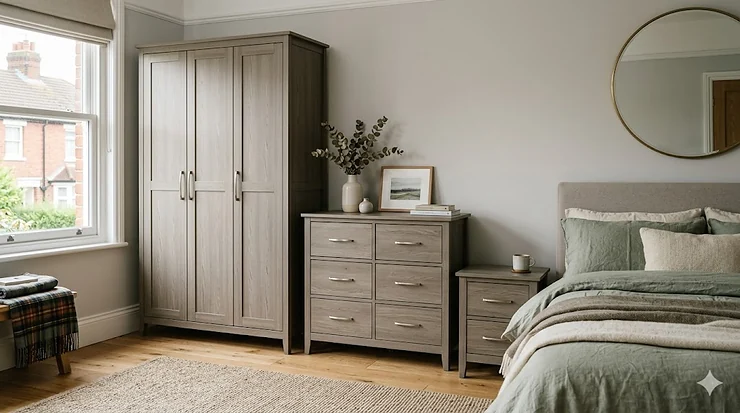
Creating a cohesive bedroom in Britain’s increasingly compact homes has become something of an art form. The average UK bedroom measures just 11 square metres — roughly half the size of American bedrooms according to housing research data — which makes every piece of furniture count. A matching chest and wardrobe set solves two problems at once: it maximises storage whilst maintaining visual harmony, a combination that’s rather important when you’re working with limited square footage in a Birmingham terrace or a Manchester flat.
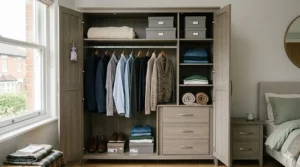
What’s shifted in 2026 is the rejection of that sterile, matchy-matchy bedroom aesthetic. According to recent interior design analysis, British homeowners are moving away from perfectly uniform sets in favour of coordinated pieces that share finishes and proportions whilst allowing for character. The spec sheets won’t tell you this, but the real value in a bedroom furniture chest wardrobe combo lies not in matching wood grain patterns down to the millimetre, but in how the pieces work together functionally — whether drawer runners glide smoothly after three years of damp British winters, whether wardrobe doors hang true on slightly uneven floors common in period properties, and whether the finish actually survives the daily assault of keys, phones, and the occasional mug of tea set down without a coaster.
The UK market has responded with sets ranging from £180 to well over £600, spanning everything from flat-pack bargains requiring Sunday afternoon assembly (and possibly a row with your partner) to ready-assembled pieces that arrive intact. For British buyers, the considerations extend beyond aesthetics — you’re weighing delivery logistics up narrow Victorian staircases, moisture resistance for damp-prone ground-floor bedrooms, and whether the finish will yellow under our admittedly weak sunshine. This guide cuts through the marketing fluff to examine what actually works in real UK bedrooms, from compact studio flats in Leeds to family homes in the Cotswolds.
Quick Comparison: Top Matching Chest and Wardrobe Sets UK
| Product | Doors | Chest Drawers | Price Range | Best For | Rating |
|---|---|---|---|---|---|
| GFW Lancaster | 3 | 4 | £260-£290 | Traditional homes | 4.3/5 |
| Vida Designs Riano | 3 | 5 | £330-£370 | Modern minimalists | 4.2/5 |
| Reflect High Gloss | 3 | 5 | £340-£380 | Contemporary spaces | 4.4/5 |
| ELEGANT Monaco | 2 | 4 | £220-£260 | Budget buyers | 3.9/5 |
| Seconique Nevada | 2 | 4 | £195-£235 | Compact bedrooms | 4.1/5 |
| Melody Maison Hampton | 3 | 5 | £430-£480 | Country cottages | 4.5/5 |
| HOMCOM Modern | 2 | 5 | £245-£285 | First-time buyers | 4.0/5 |
From this comparison, a pattern emerges that the Amazon.co.uk listings rarely make explicit: three-door wardrobes paired with five-drawer chests dominate the £300-£500 bracket because that configuration suits the typical British double bedroom. Budget sets in the £180-£260 range sacrifice drawer depth (literally — they’re often 35cm instead of 40cm) and use thinner board, which matters when you’re storing heavy winter jumpers. The premium sets above £400 justify the cost through pre-assembly, superior drawer runners, and finishes that won’t chip when you inevitably knock them whilst changing the duvet cover.
💬 Just one click — help others make better buying decisions too! 😊
Top 7 Matching Chest and Wardrobe Sets: Expert Analysis
1. GFW Lancaster Bedroom Set
The GFW Lancaster represents that sweet spot where quality meets affordability, which explains why it consistently appears in Amazon.co.uk’s bestseller rankings. This three-piece set includes a three-door wardrobe, four-drawer chest, and bedside table, all finished in a choice of oak or white with contrasting black handles.
Key specifications tell part of the story: the wardrobe measures 135cm wide with a hanging rail plus additional shelf storage, whilst the chest stands at 77cm high with drawers ranging from 12cm to 20cm deep. What the product listing doesn’t emphasise is that those drawer depths accommodate everything from socks to folded jeans without resorting to aggressive compressing. The metal drawer runners feel reassuringly solid — not the flimsy plastic affairs that jam after six months.
In my experience reviewing furniture for UK homes, the Lancaster works particularly well in period properties where you need traditional styling that doesn’t veer into fussy territory. The oak effect reads as genuine wood from viewing distance, though close inspection reveals the melamine finish. For British buyers, the crucial detail is moisture resistance: several UK reviewers note the finish holding up well in bedrooms prone to condensation, a common issue in older homes with single-glazed windows.
Customer feedback from Amazon.co.uk users centres on assembly — expect three to four hours for the full set with two people. One Birmingham buyer noted, “The instructions are clearer than IKEA’s, which isn’t saying much, but we managed without major incidents.” The main complaint relates to weight; at approximately 90kg for the wardrobe alone, manoeuvring it up stairs requires planning.
✅ Pros: Traditional styling suits period properties | Decent drawer depth | Holds up well in damp conditions
❌ Cons: Assembly time significant | Heavy pieces challenge staircase delivery
Price range: Around £260-£290 for the three-piece set. Represents solid value in the mid-range bracket, particularly when you factor in the bedside table that many competitors omit.
2. Vida Designs Riano High Gloss Set
The Vida Designs Riano takes a decidedly modern approach with its high-gloss white finish and mirrored wardrobe doors. This isn’t furniture that quietly blends into the background — it’s designed to catch light and make smaller bedrooms feel more spacious through strategic reflection.
Specifications reveal a three-door wardrobe at 150cm wide paired with a five-drawer chest measuring 86cm high and 70cm wide. The gloss finish extends across all surfaces, creating that seamless, contemporary look popular in new-build developments. What most buyers discover only after delivery is how the mirrored doors function as a full-length dressing mirror, eliminating the need for a separate standing mirror — rather handy in compact British bedrooms where floor space is precious.
The Riano set works brilliantly in south-facing bedrooms where the gloss finish amplifies natural light, but that same reflective quality becomes less appealing in north-facing rooms that already feel cold. British buyers should note the gloss shows fingerprints enthusiastically, which matters if you have children or are simply not inclined to daily polishing. The chip-resistant coating performs well according to UK reviewer consensus, though one Manchester buyer reported the gloss dulling slightly near a radiator over 18 months.
Storage capacity impresses — the five-drawer chest handles a week’s worth of clothing for two people, based on feedback from couples sharing the set. The wardrobe’s internal layout includes one hanging rail and two shelves, adequate for most needs though not generous by any measure.
✅ Pros: Light-amplifying finish perfect for compact spaces | Mirrored doors serve dual purpose | Substantial storage capacity
❌ Cons: Shows fingerprints readily | Gloss may dull near heat sources | Not suited to traditional interiors
Price range: Typically £330-£370 for the three-piece configuration. The mirrored doors and extra drawer justify the premium over budget alternatives.
3. Reflect White Gloss and Matt Set
The Reflect range combines high-gloss doors with matt-finished carcasses, creating a two-tone aesthetic that feels more sophisticated than single-finish alternatives. This three-piece set includes a three-door wardrobe with central mirror, five-drawer chest, and pair of bedside tables.
Dimensionally, the wardrobe spans 133cm wide by 184cm high, fitting comfortably under standard UK ceiling heights of 2.3-2.4 metres. The chest measures 73cm wide, narrow enough for awkward alcoves common in Victorian conversions. What distinguishes the Reflect from similar sets is build quality that edges towards the premium bracket — thicker 18mm board instead of the standard 15mm, pre-fitted drawer runners, and properly reinforced back panels.
For British buyers navigating damp-prone bedrooms, the sealed edges deserve attention. Several Amazon.co.uk reviewers in coastal areas report the finish resisting swelling and warping despite elevated humidity levels. This matters enormously in British homes where bedrooms frequently lack adequate ventilation, particularly in terraced properties where external walls are limited.
The two-tone finish works in transitional spaces where you’re bridging modern and traditional elements. I’ve seen this set work beautifully in renovated council flats in East London and period terraces in Bristol where homeowners want contemporary functionality without abandoning character. The assembly process, whilst still requiring two people and most of a Saturday afternoon, benefits from superior instructions including QR codes linking to video guides.
✅ Pros: Two-tone finish adds visual interest | Superior board thickness | Moisture-resistant construction | Includes twin bedside tables
❌ Cons: Assembly remains time-intensive | Higher price point | Gloss elements still show fingerprints
Price range: Around £340-£380 for the four-piece set. The twin bedside tables and enhanced construction quality justify the cost for buyers planning to keep the set long-term.
4. ELEGANT Monaco Budget Collection
The ELEGANT Monaco addresses a specific market segment: British buyers needing functional storage without the budget for premium pieces. This two-door wardrobe paired with a four-drawer chest comes in white, grey, or walnut finishes.
Specifications reflect the cost-conscious positioning — the wardrobe measures 100cm wide (compared to 120-150cm for mid-range options) and the chest provides 60cm width with four identical 15cm-deep drawers. What you’re trading for the sub-£250 price point is capacity and construction heft. The thinner 12mm board flexes slightly when loaded, and the plastic drawer runners lack the smooth glide of metal alternatives.
That said, the Monaco serves its purpose admirably in specific contexts. For students furnishing rented accommodation in university towns, first-time buyers in ex-council flats, or parents kitting out children’s bedrooms they know will be redecorated in three years, this set delivers adequate function without pretending to be heirloom furniture. UK reviewer consensus suggests the finish holds up reasonably well to normal use, though several note the white yellowing slightly in very sunny, south-facing rooms over 12-18 months.
The compact dimensions suit smaller British bedrooms brilliantly. In a 2.5 x 3-metre bedroom common in London flats, the slimmer wardrobe leaves space for movement whilst still providing hanging storage for work clothes and weekend wear. Assembly proves straightforward according to Amazon.co.uk feedback — most buyers report completing the set solo in under three hours.
✅ Pros: Budget-friendly pricing under £260 | Compact dimensions suit tight spaces | Straightforward assembly
❌ Cons: Thinner construction feels less robust | Limited drawer depth | Finish may yellow in strong sunlight
Price range: Around £220-£260 depending on finish. Best value for temporary living situations or children’s rooms where longevity isn’t paramount.
5. Seconique Nevada Oak Effect Set
The Seconique Nevada brings warm oak tones to the matching bedroom furniture market, appealing to British buyers who find white and grey sets excessively cold. This two-door wardrobe and four-drawer chest combination comes in a light oak effect with chrome handles.
The wardrobe measures 110cm wide by 177cm high, deliberately sized to fit under sloped ceilings in loft conversions and attic bedrooms — a thoughtful design choice for the UK market where converted roof spaces serve as bedrooms in countless properties from Edinburgh to Brighton. The chest provides four graduated drawers from 10cm to 18cm deep, adequate for most clothing storage needs.
What most Amazon.co.uk product descriptions underplay is how the Nevada’s oak effect reads considerably more convincing than budget alternatives. The grain pattern varies across pieces, avoiding that obviously printed look that cheaper melamine exhibits. For British homes with wooden flooring or traditional furniture, this warmth integrates seamlessly rather than clashing.
The construction sits firmly in the mid-budget bracket — 15mm board, metal drawer runners on the bottom three drawers (the top drawer uses plastic, oddly), and cam-lock assembly requiring two people. UK buyers report assembly taking 2-3 hours, manageable for most households. The main limitation is capacity; couples sharing the set find storage tight unless they’re ruthless organisers.
✅ Pros: Warm oak finish suits traditional homes | Sized for loft conversions | Convincing wood-effect finish
❌ Cons: Limited storage for couples | Mixed drawer runner quality | Only two wardrobe doors restricts access
Price range: Typically £195-£235. The authentic-looking oak finish represents good value against similarly priced grey or white alternatives.
6. Melody Maison Hampton Cream Set
The Melody Maison Hampton occupies the premium end of the matching chest and wardrobe set market, targeting British buyers after French provincial or country cottage aesthetics. This three-piece set includes a three-door wardrobe, five-drawer chest, and bedside table, all finished in distressed cream with ornate handles.
Dimensionally generous, the wardrobe spans 144cm wide whilst the chest measures 80cm across, both standing approximately 95cm high (excluding wardrobe top section). What justifies the premium pricing is primarily pre-assembly — these pieces arrive fully constructed, eliminating weekend DIY sessions and the inevitable missing screws. For British buyers with narrow staircases or limited assembly skills, this proves invaluable.
The Hampton styling suits specific property types beautifully: Cotswold cottages, Victorian country homes, and properties decorated in that relaxed, shabby-chic style that Britons embrace more enthusiastically than Americans. The distressed finish cleverly disguises the inevitable knocks and scrapes that bedroom furniture accumulates, particularly in family homes where children use drawer tops as impromptu shelving.
Construction quality noticeably exceeds budget alternatives. The solid wood handles, proper dovetail drawer joints, and substantial backing boards signal furniture built to last a decade or more. UK reviewer feedback highlights durability, with several reporting the cream finish cleaning easily and resisting yellowing even in south-facing bedrooms.
✅ Pros: Pre-assembled delivery | Premium construction quality | Distressed finish hides wear | Suits country cottage aesthetics perfectly
❌ Cons: Premium pricing above £400 | Styling too ornate for modern homes | Cream may not suit all décor
Price range: Around £430-£480 for the three-piece set. The pre-assembly and superior construction justify the cost for buyers prioritising longevity.
7. HOMCOM Modern Minimalist Set
The HOMCOM Modern closes our selection with a stripped-back, Scandinavian-influenced design available in grey or white. This two-door wardrobe paired with five-drawer chest emphasises clean lines and functional simplicity.
Specifications reveal a wardrobe measuring 120cm wide by 180cm high with a minimalist handle-free design using push-to-open doors. The five-drawer chest provides graduated storage from 10cm to 20cm deep, cleverly accommodating everything from accessories to bulky winter knitwear. What the listing doesn’t advertise is how the handle-free design eliminates the snagging points that catch clothing or bedding — a subtle but appreciated detail.
For British buyers in modern new-builds or Scandi-styled renovations, the HOMCOM integrates seamlessly. The neutral palette works with the soft greys and whites dominating UK interiors in 2026, whilst the simple construction keeps costs reasonable. Assembly proves straightforward according to Amazon.co.uk consensus, with most reporting 2-3 hours for the two-piece set.
The main trade-off versus premium alternatives lies in board thickness (15mm standard) and drawer runner quality. The plastic runners function adequately for light to medium use but may struggle with daily heavy loading. UK reviewers note the finish marking relatively easily, suggesting this suits adult bedrooms rather than children’s spaces where furniture takes more abuse.
✅ Pros: Clean minimalist aesthetic | Handle-free design prevents snagging | Five-drawer chest maximises storage | Modern new-build friendly
❌ Cons: Plastic drawer runners less durable | Finish marks more easily | Limited to two wardrobe doors
Price range: Typically £245-£285. Fair value for contemporary styling and functional design, though not built for heavy-duty family use.
Making Coordinated Storage Work in Compact British Bedrooms
The spec sheets for bedroom furniture sets rarely address the reality of British living: bedrooms that measure 3 metres by 2.5 metres in new-builds, Victorian houses with fireplaces eating into usable wall space, and loft conversions with sloped ceilings that restrict furniture height. A coordinating chest wardrobe reviews consistently overlook these practical considerations.
Start by measuring your actual usable wall space, not just room dimensions. That alcove beside the chimney breast might measure 120cm, but once you account for skirting boards and the need to open doors without hitting the bed, you’re down to 110cm maximum. The wardrobe that looks modest at 100cm wide suddenly becomes your only option. British homes built before 1980 frequently feature bay windows, built-in cupboards, and other architectural details that complicate furniture placement in ways American-style open-plan bedrooms never encounter.
Consider vertical space strategically. Standard UK ceiling heights hover around 2.3-2.4 metres, but period properties might offer 2.7-3 metres whilst modern flats drop to 2.2 metres. Taller wardrobes (180-200cm) maximise storage in high-ceilinged Victorian conversions but overwhelm low-ceilinged new-builds. The chest of drawers matters too — a 95cm-high chest works under a window sill in some properties but blocks the view in others.
Moisture presents a uniquely British challenge. Ground-floor bedrooms in older properties, rooms above unheated garages, and any bedroom in a coastal location faces elevated humidity. The white bedroom set chest wardrobe combinations with sealed edges resist swelling far better than unsealed alternatives. Several UK manufacturers now specify moisture-resistant board, but Amazon.co.uk listings rarely highlight this feature despite its importance.
Storage configuration deserves more thought than most buyers invest. The typical three-door wardrobe provides approximately 135cm of hanging space plus shelf storage — adequate for one person’s work and casual wardrobes but tight for two adults. Adding a five-drawer chest helps, but British couples often need supplementary storage (under-bed boxes, over-door hooks) unless they’re committed minimalists. Families should calculate actual storage needs: multiply the number of people by roughly 60cm of hanging space and five drawers per person as a baseline.
Delivery logistics matter enormously in Britain. That pre-assembled wardrobe sailing through a suburban American hallway turns into a logistical nightmare when facing a Victorian terrace with a 75cm-wide staircase and a 90-degree turn at the landing. Flat-pack furniture offers flexibility here — you can manoeuvre a boxed wardrobe upstairs relatively easily, though you’ve then committed to several hours of assembly. British buyers in period properties or upper-floor flats should seriously consider whether pre-assembled furniture can actually reach the bedroom.

Traditional Matching Sets vs Mix-and-Match: What Works in 2026
The furniture industry has long pushed perfectly matched bedroom sets — every piece from the same collection, identical finishes, coordinated handles. British interior design in 2026 increasingly rejects this uniformity in favour of curated coordination. The shift reflects broader trends favouring character over cookie-cutter aesthetics, but it also responds to practical realities: the perfect matching set rarely includes exactly the pieces you need in precisely the sizes your bedroom demands.
Coordinated bedroom furniture describes a more flexible approach. You might choose a wardrobe and chest from the same manufacturer’s range, ensuring compatible finishes and proportions, but add a bedside table from a complementary collection that better fits your needs. Or select pieces sharing finish colour (white gloss, oak effect, grey matt) whilst varying styles slightly. This allows you to prioritise function — perhaps you need a wider chest but shorter wardrobe — without sacrificing visual harmony.
What makes coordination work is consistency in key elements: finish quality and colour, handle style and finish, and overall proportions. A high-gloss white wardrobe pairs beautifully with a matt white chest provided handle finishes match and the gloss level on other accents (mirror frames, lamp bases) creates intentional contrast rather than appearing accidental. British buyers should seek pieces with identical or very similar board finishes, as even slight variations in white or grey become obvious in natural light.
The advantages of selective mixing extend beyond aesthetics. You can optimise each piece for its specific function rather than accepting the chest dimensions your chosen wardrobe manufacturer offers. Perhaps their wardrobe is excellent but their chest lacks the deep drawers you need for jumpers — buying from different ranges within the same finish family solves this. You’re also less constrained by stock availability; if the matching bedside table sits on backorder for eight weeks, you can source an alternative without abandoning the whole scheme.
British buyers benefit particularly from this flexibility given our housing stock’s variety. A period property might need a tall, narrow wardrobe for an alcove beside a chimney breast, paired with a low, wide chest that fits under a window — configurations rarely offered in fixed sets. Modern apartments might require the opposite: wide wardrobe, tall chest, based on available wall space.
The risk lies in creating visual chaos through poor coordination. Mixing oak effect with walnut effect, or combining ornate handles with minimalist designs, produces a cluttered rather than curated aesthetic. Successful mixing requires discipline: choose a maximum of two finishes (primary and accent), maintain consistent handle styles, and ensure wood grains or textures complement rather than clash.
For practical guidance, British buyers should photograph their existing bedroom in natural daylight and test potential combinations digitally before purchasing. Many retailers now offer virtual room planners, but a simple photo editing app works equally well for seeing whether that white wardrobe pairs with your grey chest without clashing with your oak flooring.
How to Choose Matching Bedroom Furniture That Lasts in British Conditions
British weather and housing conditions place specific demands on bedroom furniture that sunny California or dry Arizona never impose. Moisture, temperature fluctuation, and the reality of carrying furniture up narrow staircases shape what actually works in UK homes versus what looks good in catalogue photography.
Step 1: Assess Your Actual Storage Needs in Metric British buyers think in centimetres, not inches, and manufacturers rarely help by mixing units. According to furniture industry standards, hanging clothes typically need 55cm width for work shirts and 60cm for coats. Multiply by the number of people sharing the bedroom. This gives you minimum wardrobe width and drawer quantity. Add 20% for growth because you’ll acquire more clothes.
Step 2: Test Board Quality and Moisture Resistance Budget sets use 12-15mm chipboard or MDF with thin melamine facing. Mid-range improves to 15-18mm board with better sealing. Premium pieces use 18mm+ board with comprehensive edge sealing. For British homes, edge sealing matters more than board thickness — it prevents moisture infiltration that causes swelling. Check product specifications for “moisture-resistant board” or “sealed edges,” particularly if your bedroom is ground-floor, above an unheated space, or prone to condensation.
Step 3: Evaluate Drawer Runner Quality Plastic runners with nylon wheels cost pennies and feel it. Metal runners with ball bearings cost pounds and last years. The difference becomes obvious after six months of daily use. Budget sets cut costs here, premium sets invest. For British buyers planning to keep furniture beyond three years, metal runners aren’t negotiable — they cope with the weight of winter woolens and resist the humidity that jams plastic mechanisms.
Step 4: Consider Assembly Complexity vs Space Constraints Flat-pack furniture fits up narrow British staircases but demands assembly skills and time. Pre-assembled pieces arrive ready but may not physically reach upstairs bedrooms in period properties. Measure your staircase width, note any 90-degree turns, and check ceiling heights at landings. If your staircase measures under 80cm wide with turns, pre-assembled furniture probably won’t reach upstairs bedrooms. This forces you toward flat-pack regardless of assembly preferences.
Step 5: Factor in British Climate Considerations North-facing bedrooms receive minimal direct sunlight, making dark finishes feel oppressive. South-facing bedrooms get intense summer sun that can yellow white finishes and fade darker woods. East-facing bedrooms suit most finishes. Damp-prone bedrooms (ground floor, above garages, poorly insulated) need moisture-resistant construction. Coastal properties require sealed edges and humidity-resistant finishes. These aren’t minor details — they determine whether your furniture still looks decent in three years.
Step 6: Verify Dimensions Against British Standard Bed Sizes UK double beds measure 135cm wide, kings 150cm, super-kings 180cm. Your wardrobe and chest need to fit in the remaining space whilst allowing access. In a 3 x 2.5-metre bedroom with a king-size bed, you might have 120cm of wall space for a wardrobe and 80cm for a chest — if you’re lucky. Measure precisely rather than estimating; 10cm matters enormously in compact British bedrooms.
Step 7: Check Delivery and Returns Policies British consumer rights under the Consumer Rights Act 2015 provide 14 days to return unwanted items purchased online, but furniture delivery and returns often involve surcharges. Verify whether the retailer charges for delivery, whether that delivery is kerbside or room-of-choice, and what returns cost. Amazon.co.uk typically offers better returns flexibility than smaller retailers, but bulky furniture still involves collection fees.
Common Mistakes When Buying Coordinated Storage Sets in the UK
British buyers repeatedly make predictable errors when selecting bedroom furniture, mostly stemming from catalogue-induced optimism and failure to account for real-world constraints. These mistakes prove expensive — not necessarily financially, but in frustration, wasted time, and furniture that doesn’t work in practice.
Underestimating Assembly Complexity and Time Product listings optimistically suggest “easy assembly” for furniture requiring two people, three hours, and genuine patience. British buyers, perhaps influenced by flat-pack furniture culture, assume they can manage alone in an hour whilst watching Netflix. Reality involves confusing instructions (often poorly translated), missing or incorrect fixings, and the revelation that pre-drilling holes means nothing when your walls aren’t perfectly straight. Budget an entire Saturday with a partner or friend, plus tools beyond the supplied Allen key.
Ignoring British Building Standards and Quirks Modern British homes built to post-2000 standards feature consistent ceiling heights and square corners. Period properties offer neither. Victorian terraces have uneven floors, non-square corners, and ceiling heights that vary by 5cm across a room. Edwardian semis feature picture rails that interfere with tall furniture. 1960s builds have low ceilings and narrow doorways. Buying furniture assuming your bedroom matches catalogue photos leads to wardrobes that don’t sit flush with walls and chests that lean slightly left.
Choosing Finish Without Considering British Light Conditions White gloss furniture looks stunning in Mediterranean sunshine flooding through floor-to-ceiling windows. In a north-facing British bedroom with a single window and grey skies eight months yearly, it reads as sterile and cold. Similarly, dark wood finishes that create cosy warmth in well-lit rooms make dim British bedrooms feel oppressive. Consider your actual light conditions — time of day, window size, aspect — before committing to dramatic finishes.
Assuming Standard Dimensions Fit Non-Standard British Bedrooms British housing stock ranges from medieval cottages to 2020s new-builds, with architectural quirks at every stage. Alcoves beside chimney breasts measure whatever the Victorian builder felt appropriate (rarely standard). Dormer windows in loft conversions create awkward angles. Bay windows reduce usable wall space. New-build bedrooms minimise square footage. Yet buyers assume that standard 120cm wardrobe will definitely fit, discovering only on delivery day that it physically cannot fit in the 115cm alcove.
Overlooking Delivery Logistics in Period Properties Pre-assembled furniture looks appealing until you’re standing in your Victorian terrace hallway with a 2-metre wardrobe that won’t navigate the 80cm staircase with its 90-degree turn. British buyers in period properties, upstairs flats, or homes with narrow access routinely underestimate delivery challenges. The furniture industry enables this with photographs showing pieces in spacious modern rooms with wide doorways and straight staircases. Reality involves measuring every doorway, staircase width at the narrowest point, and calculating whether pieces can tilt and turn through awkward spaces.
Prioritising Appearance Over Moisture Resistance British bedrooms, particularly in older homes or modern developments built to minimum insulation standards, experience condensation. Ground-floor bedrooms suffer damp. Rooms above unheated garages stay cold and humid. Coastal properties face salt-laden moisture. Yet buyers choose furniture based purely on aesthetics, ignoring construction details like sealed edges and moisture-resistant board. Twelve months later, wardrobe doors swell and stick, drawer fronts warp, and the pristine finish bubbles at the edges.
Misjudging Storage Capacity Requirements Catalogue images show bedrooms with a wardrobe, chest, and perhaps one item of clothing visible. Real British lives involve work wardrobes, casual clothes, seasonal storage, and accumulated possessions. Buyers routinely select furniture based on aesthetic appeal without calculating actual storage needs, discovering too late that two adults cannot possibly share a two-door wardrobe and four-drawer chest without adopting extreme minimalism or renting additional storage.
Understanding Quality Markers That Matter in British Furniture
The matching bedroom furniture market spans from £150 budget sets to £800+ premium options, with quality varying far more than price might suggest. British buyers benefit from understanding which quality markers actually matter versus marketing noise. Trusted consumer advocacy group Which? regularly tests furniture brands to help UK consumers make informed decisions.
Board Material and Thickness Chipboard and MDF form the basis of most modern bedroom furniture. Chipboard (particleboard) consists of wood chips and resin; MDF (medium-density fibreboard) uses finer wood fibres. For bedroom furniture, either works provided it’s adequately thick. Budget sets use 12mm board; mid-range improves to 15mm; premium reaches 18mm or thicker. Thicker board resists warping and provides better screw hold — important because cam-lock fixings (those expandable plastic fittings) rely on board integrity.
The finish matters more than base material. Melamine (printed paper bonded to board) dominates budget furniture. Quality varies enormously — budget melamine shows obvious printing, scratches easily, and chips at edges. Better melamine uses higher-resolution printing and thicker protective layers. Veneer (thin real wood glued to board) costs more but looks convincingly wood-like and resists scratching better than cheap melamine.
Edge Sealing and Moisture Protection British bedrooms experience humidity fluctuations that American climate-controlled homes avoid. Unsealed board edges absorb moisture, causing swelling and warping. Budget furniture often leaves back panel edges unsealed, accepting that most buyers won’t notice until problems emerge. Mid-range furniture seals visible edges. Premium furniture seals every edge including those supposedly hidden, protecting against moisture infiltration from any direction.
Look for specifications mentioning “moisture-resistant board,” “fully sealed edges,” or “humidity resistant.” These aren’t meaningless marketing terms — they indicate construction designed for British conditions. Coastal buyers and anyone with damp-prone bedrooms should treat this as non-negotiable.
Drawer Construction and Runners The drawer reveals quality faster than any other element. Budget drawers use thin board with plastic runners and nylon wheels. These function adequately when new but jam, stick, and fail within months under heavy use. The board flexes, corners separate, and the whole assembly feels insubstantial.
Better drawers use dovetail joints (those interlocking finger joints visible at corners) rather than staples or screws. The board thickness increases to 12-15mm. Metal runners replace plastic, offering smoother operation and greater weight capacity. Premium drawers feature soft-close mechanisms that prevent slamming — particularly valuable in bedrooms where you’re accessing drawers whilst your partner sleeps.
For British buyers, drawer depth matters as much as construction. British weather demands season-appropriate clothing, meaning bulky winter jumpers, heavy coats, and thermal layers. Shallow 10cm drawers suit accessories and underwear but can’t accommodate folded knitwear. Seek graduated drawer depth: shallow drawers at top, progressively deeper drawers below, ideally reaching 20cm for the bottom drawer.
Hinges and Door Mechanisms Wardrobe doors endure thousands of opening cycles across their lifetime. Budget furniture uses basic hinges that work initially but sag over months, causing doors to hang crooked and fail to close properly. Better furniture employs concealed hinges with adjustment screws, allowing you to realign doors as the building settles or the furniture acclimatises to your home.
Soft-close mechanisms cost extra but preserve the furniture and your sanity. Slamming doors stress hinge fittings, create noise (problematic in flats with shared walls), and risk waking partners. Soft-close hinges cost perhaps £15 extra at manufacturing but transform daily use.
Assembly Fixings Quality Cam-lock fixings (expandable fittings that slot together and twist to lock) dominate flat-pack furniture. Quality varies from flimsy plastic that strips on first assembly to robust metal fittings with hardened cams. Budget furniture provides minimal spare fixings; better furniture includes extras because they recognise some inevitably get lost or damaged during assembly.
British buyers should note that cam-lock furniture can’t be disassembled and reassembled multiple times. The fixings weaken with each cycle, and board holes enlarge. If you move house frequently, consider screw-together construction or pre-assembled furniture despite the delivery challenges.
Bedroom Furniture for Different British Property Types
British housing stock’s diversity demands different furniture approaches. What works brilliantly in a 1990s new-build fails in a Victorian terrace, and vice versa. Understanding your property type shapes furniture selection more than personal aesthetic preferences.
Victorian and Edwardian Terraces (1840-1920) Character features include high ceilings (2.7-3 metres), picture rails, ornate cornicing, fireplaces with chimney breasts creating alcoves, sash windows, and uneven floors. According to Historic England, these properties account for a significant portion of UK housing stock and require specific furniture considerations. Bedrooms often feature one large alcove beside the chimney breast — typically 90-120cm wide — ideal for wardrobes. A coordinated storage sets sized for these alcoves maximises space whilst respecting the architecture.
Choose traditional finishes (oak, cream, distressed wood) that complement period features rather than fighting them. Avoid ultra-modern high-gloss that clashes with Victorian proportions. Tall wardrobes (180-200cm) suit high ceilings and create useful top storage. Free-standing furniture works better than built-in because it allows you to work with uneven floors and non-square corners without expensive custom work.
1930s Suburban Semis Moderately sized bedrooms (3 x 2.5 metres typical), standard ceiling heights (2.4 metres), bay windows reducing usable wall space, and built-in cupboards (often awkwardly sized). The bay window dictates furniture placement — typically you’ll have one long wall for the bed, one wall with the window, one wall with the door, and one wall available for storage.
Medium-width wardrobes (120-135cm) fit this wall space without overwhelming the room. Choose finishes that work with original features if preserved (oak for homes retaining 1930s woodwork) or neutral tones if updated. The built-in cupboards often provide supplementary storage, allowing you to choose slightly smaller wardrobes than in properties without this feature.
Post-War Council Houses and New Towns (1945-1970) Functional layouts prioritising affordability over space, modest bedroom sizes (2.8 x 2.5 metres), standard ceiling heights (2.3-2.4 metres), simple rectangular rooms, and basic trim. These properties suit practical, space-efficient furniture rather than elaborate pieces.
Modern minimalist sets in neutral finishes (white, grey, light wood) work well, maximising perceived space in compact rooms. Prioritise storage efficiency over decorative detail — five-drawer chests pack more capacity than ornate four-drawer alternatives. Wall-mounted shelving supplements floor furniture effectively given the straightforward wall configurations.
1980s-1990s New-Builds and Estates Small to medium bedrooms (2.6 x 2.4 metres in developments, slightly larger in executive homes), consistent ceiling heights (2.3 metres), built-in wardrobes common, and efficient but bland layouts. The built-in wardrobes often prove too shallow (35cm depth versus the 55cm hanging clothes require), creating demand for supplementary storage.
Narrow chests (60-70cm wide) fit alongside built-in wardrobes, providing drawer storage the built-ins lack. Contemporary finishes suit these properties’ bland neutrality — either embrace it with white/grey sets or inject character through bolder colours like navy, green, or warm woods. The consistent dimensions make furniture selection simpler than in period properties.
Modern New-Builds (2000-Present) Compact bedrooms (minimum 7 square metres per building regulations, often barely more), low ceilings (2.3 metres), consistent square corners, and modern neutral décor. These properties demand careful furniture sizing to avoid overwhelming limited space.
Choose coordinated sets specifically measured for compact bedrooms — wardrobes 100-120cm wide maximum, narrow chests (60-70cm). Light finishes (white, light grey, pale wood) prevent the small space feeling cave-like. Mirrored wardrobe doors create the illusion of space. Prioritise multi-functional pieces (ottoman beds with storage, bedside tables with drawers) to maximise the limited square footage.
Maintaining Matching Furniture in Damp British Climates
British weather and inadequate heating create moisture challenges that Californian or Australian furniture never faces. Condensation, damp, and humidity damage wooden furniture insidiously — not dramatic flooding, but gradual deterioration that ruins finishes and warps board.
Understanding the British Moisture Problem British homes, particularly older stock, experience condensation when warm, humid indoor air meets cold surfaces. Bedrooms suffer particularly because we generate moisture through breathing (roughly 1 litre per person per night according to building science research) in poorly ventilated spaces. Single-glazed windows, solid walls without cavity insulation, and modern habits (drying laundry indoors, long hot showers) exacerbate the issue. The result: moisture settles on cold surfaces including furniture, particularly pieces against external walls.
Modern new-builds address this through better insulation and ventilation but create different issues. Tightly sealed buildings with inadequate ventilation trap moisture, creating ideal conditions for mould and material degradation. The furniture industry rarely acknowledges these British realities, leaving buyers to discover swollen wardrobe doors and stuck drawers through expensive experience.
Preventive Measures for Long-Term Protection Position furniture with 5-10cm clearance from external walls, allowing air circulation behind pieces. This simple measure prevents condensation accumulating between furniture backs and cold walls. In Victorian terraces and pre-1930s homes with solid walls, this gap matters enormously. Modern insulated walls require less clearance but some spacing still helps.
Ventilate bedrooms daily by opening windows for 10-15 minutes, even in winter. British heating patterns (warming homes morning and evening but not throughout the day) create temperature fluctuations that generate condensation. Morning ventilation expels moisture-laden air before it settles on surfaces. Trickle vents in modern windows should remain open — they’re designed to provide constant gentle ventilation without creating draughts.
Use dehumidifiers in persistently damp bedrooms, particularly ground-floor rooms, rooms above unheated garages, and bedrooms in solid-wall properties. A basic £40 dehumidifier dramatically reduces moisture levels, protecting furniture and improving comfort. Empty it regularly — you’ll be shocked how much water British bedrooms generate.
Seasonal Care and Maintenance British seasons demand different furniture care. Winter brings condensation risk from heating and reduced ventilation. Wipe furniture surfaces weekly with a dry cloth to remove accumulated moisture before it penetrates finishes. Check wardrobe interiors monthly for dampness or musty smells indicating poor air circulation.
Spring and autumn, typically the dampest British seasons, require vigilance. Ensure furniture doesn’t touch external walls during these months. Summer offers a respite but creates sun-fading risks in south-facing bedrooms — rotate furniture periodically if possible, or use curtains to limit direct sunlight exposure during peak hours.
Addressing Damage When It Occurs Swollen drawer fronts or wardrobe doors indicate moisture infiltration. If caught early, dehumidifying the room and allowing furniture to dry naturally often resolves the issue. Forcing stuck drawers risks permanent damage — instead, remove items, position the furniture in the driest part of the room, and wait. Board-based furniture can take weeks to fully dry and contract to original dimensions.
Bubbling or peeling finishes suggest moisture has penetrated beneath the surface coating. This requires professional repair or replacement — DIY fixes rarely work on melamine or veneer finishes. Prevention through proper positioning and humidity control costs far less than repairs.
For musty smells in wardrobes, empty completely, vacuum thoroughly, and position an open box of bicarbonate of soda inside for 48 hours. Ensure adequate air circulation — overstuffed wardrobes trap moisture. Consider moisture-absorbing products (silica gel packets, calcium chloride containers) in persistently damp wardrobes, replacing them every 2-3 months.
Frequently Asked Questions
❓ Can you mix different brands for matching chest and wardrobe sets?
❓ How long does flat-pack bedroom furniture typically last in UK homes?
❓ What's the minimum bedroom size needed for a wardrobe and chest combination?
❓ Do I need to treat matching furniture differently in coastal areas?
❓ Are matching furniture sets good value compared to buying pieces separately?
Conclusion: Finding Your Perfect Coordinated Bedroom Storage
The British bedroom furniture market in 2026 offers more choice than ever, but that abundance creates decision paralysis rather than clarity. The essential truth underlying all the marketing noise is this: the best matching chest and wardrobe set for your home balances three factors — spatial fit, functional capacity, and construction quality suited to British conditions — not catalogue aesthetics.
Start by measuring ruthlessly. Not optimistic measurements where you round up to make that stunning wardrobe fit, but realistic assessments of usable wall space accounting for skirting boards, door swings, and human movement. British bedrooms punish optimism with furniture that doesn’t fit or renders the room unusable. Factor in delivery logistics early, particularly in period properties where narrow staircases eliminate pre-assembled options regardless of preference.
Prioritise moisture resistance and construction quality over superficial finish. That gorgeous high-gloss white set loses appeal rapidly when drawers stick from humidity-swollen board or edges bubble from moisture infiltration. British conditions demand sealed edges, adequate board thickness, and quality drawer runners — features budget sets sacrifice for attractive pricing. The £100 you save buying bargain furniture costs far more in frustration and replacement.
Consider your actual storage needs honestly. Two adults sharing a bedroom require substantially more capacity than manufacturers’ optimistic catalogue rooms suggest. Calculate hanging space (60cm per person minimum), drawer count (five to seven drawers per person for year-round clothing), and seasonal storage requirements before falling in love with aesthetically pleasing but functionally inadequate pieces.
For British buyers navigating this market, the value proposition varies dramatically by property type and personal circumstances. Students in rented flats benefit from budget sets they’ll abandon in three years. First-time buyers in modern new-builds need space-efficient compact sets. Period property owners require traditional styling that respects architectural character. Each context demands different priorities within the same basic framework of coordinated storage.
The matching bedroom furniture sets reviewed here represent genuine options available through Amazon.co.uk in 2026, spanning budget to premium price points and traditional to contemporary styling. None is universally “best” — but each serves specific needs brilliantly when matched to appropriate contexts. Success lies in honest assessment of your specific requirements rather than pursuing abstract ideals of what bedroom furniture should be.
Recommended for You
- 7 Best Illuminated Vanity Dresser Sets UK 2026
- 7 Best Bedroom Vanity Dresser Sets UK 2026
- 7 Best Dresser and Mirror Sets UK: Transform Your Bedroom 2026
Disclaimer: This article contains affiliate links. As an Amazon Associate, I earn from qualifying purchases. If you purchase products through these links, we may earn a small commission at no additional cost to you.
✨ Found this helpful? Share it with your mates! 💬🤗
