In This Article
Here’s a confession every parent eventually makes: you went looking for a simple pink chest of drawers girls bedroom storage solution, and forty-five minutes later you’re twelve tabs deep, comparing drawer glide mechanisms like you’re buying a car. Sound familiar? You’re not being dramatic. A chest of drawers is one of the few pieces of furniture your child will physically wrestle with every single day — yanking, slamming, climbing, occasionally using it as a launchpad for a teddy bear expedition. It has to survive that.
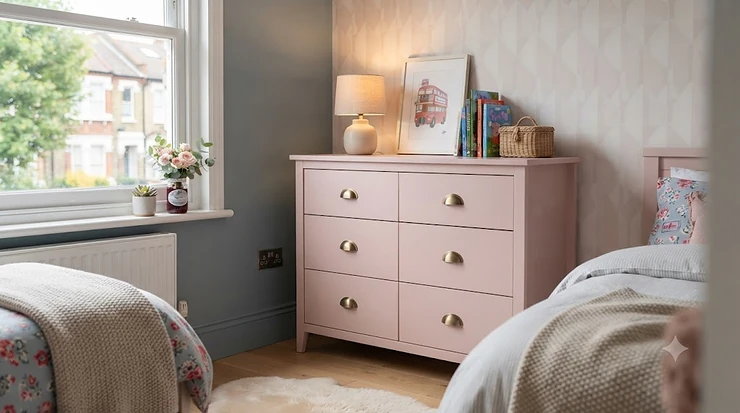
What is a pink chest of drawers for a girls bedroom? In short, it’s a freestanding storage unit with stacked drawers, finished in pink tones, sized and built for a child’s room — combining everyday clothes storage with a decorative colour statement that ties the whole space together. Simple concept, surprisingly complicated shopping list once you factor in drawer count, build material, weight limits, and — let’s be honest — how it’ll survive a five-year-old’s daily onslaught.
We’ve spent time digging through real product specs, aggregated review sentiment, and current chest of drawers design trends to bring you seven genuinely different options, spanning budget plastic units through to a proper solid-handled wooden chest that could survive a house move or three. We’ll also cover the blue chest of drawers boys bedroom question, because plenty of you are furnishing two rooms at once, or one shared space that needs to work for siblings of different genders. Whether you’re after girls room storage ideas beyond the obvious, or hunting boys bedroom furniture amazon shoppers actually rate highly, this guide has you covered — and every price mentioned below is a range, since retail prices shift constantly and we’d rather be accurate than precise-sounding and wrong.
Quick Comparison Table
Short on time? Here’s the condensed version before we go deep on each product.
| Product | Drawers | Material | Best For | Price Range |
|---|---|---|---|---|
| Junior Vida Neptune 5 Drawer Chest (Pink & Oak) | 5 | Chipboard/MDF, wood-effect veneer | All-round bedroom storage, ages 3-10 | £70-£95 |
| HOMCOM 9-Drawer Kids Storage Unit (Pink) | 9 | PP plastic | Toddlers, budget buyers | Under £45 |
| HOMCOM 6-Drawer Fabric Chest (Pink) | 6 | Steel frame, MDF top, fabric drawers | Lightweight, easy-clean storage | £45-£65 |
| EnHomee 7-Drawer Pink Dresser | 7 | Steel frame, two-layer wooden top | Tall storage, growing wardrobes | £60-£90 |
| Isabella High Gloss Wide Chest (Pink & Gold) | 6 | Engineered wood, high-gloss lacquer | Teens, statement pieces | £150-£220 |
| Junior Vida Neptune 5 Drawer Chest (Blue & Oak) | 5 | Chipboard/MDF, wood-effect veneer | Boys bedroom, sibling matching sets | £70-£95 |
| Sorbus 4-Drawer Dresser (Tie-Dye Blue/Pink/Purple) | 4 | Steel frame, MDF top, fabric drawers | Shared rooms, gender-neutral spaces | £40-£60 |
The spread here is deliberate: on paper, the difference between the cheapest and priciest option is roughly five-fold, but that gap mostly reflects material and longevity, not marketing fluff. A £40 plastic unit and a £200 solid-handled wood-effect chest are built for genuinely different jobs — one is a toddler’s toy-tidying station, the other is furniture that’ll still be standing when your daughter is choosing her GCSE options. Reviewers consistently flag drawer glide quality and weight capacity as the two things that separate “still going strong after two years” from “handles falling off within six months,” so those are the two specs worth reading twice before you buy.
💬 Just one click — help others make better buying decisions too!😊
Top 7 Pink & Blue Chest of Drawers Picks: Expert Analysis
1. Junior Vida Neptune 5 Drawer Chest (Pink & Oak) — best all-round pick for real bedroom storage
The pale pink and contrasting oak-effect finish is the standout here, and it’s genuinely more sophisticated in person than the product photos suggest — less “candy floss,” more “soft blush that won’t look dated in three years.” Built from chipboard and MDF with a paper veneer and melamine finish, this chest has five drawers (three large, two small), a 5kg weight limit per drawer, and a 25kg desktop panel limit — numbers that matter more than they sound, because they tell you this isn’t a flimsy flat-pack afterthought; it’s rated to actually hold a proper clothing rotation, not just socks and hair clips.
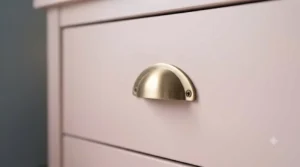
Based on the spec comparison against similarly priced kids’ chests, the wooden inset handles are the quiet hero of this design — they’re chunky enough for small hands to grip without a knob to snag on, which matters more once you’ve had a toddler get a sleeve caught on a sharp metal pull. What most buyers overlook about this model is that it’s part of a wider Neptune range, so the chest, bedside table, wardrobe and desk all match — useful if you’re furnishing a whole room rather than patching in one item.
Reviewers consistently report straightforward flat-pack assembly, generally within the hour, and note the drawers glide smoothly from day one. A recurring theme in aggregated feedback is that the finish shows scuffs on white-oak contrast edges over time with heavy use, which is worth knowing if your daughter treats furniture like a climbing frame.
Pros:
- ✅ Genuine 5kg-per-drawer weight rating, not just marketing language
- ✅ Matches a full Neptune bedroom furniture range
- ✅ Child-friendly wooden handles reduce snag and pinch risk
Cons:
- ❌ Corners and edges can show wear faster than the drawer fronts
- ❌ Self-assembly required, with no option to buy pre-built
Sitting in the mid-£70s to mid-£90s range depending on retailer promotions, this is genuinely good value for a chest built to last through primary school. If you only buy one item from this list, this is the safe, sensible pick.
2. HOMCOM 9-Drawer Kids Storage Unit (Pink) — best budget pick for toddlers
Nine drawers for under £45 sounds almost too good to be true, and here’s what the spec sheet won’t tell you outright: this is a lightweight PP plastic unit, recommended for ages 3-6, not a heavyweight chest built to survive a decade. That’s the standout feature, and it’s also the honest caveat — this is toddler-specific furniture, not a long-term dresser.
The nine removable drawers are genuinely useful for a young child learning to sort and tidy, since smaller compartments encourage “socks here, small toys there” categorisation rather than one giant drawer swallowing everything. Stump feet elevate the unit slightly off the ground, and rounded corners reduce bump injuries during the toddling-into-furniture years every parent remembers vividly.
Here’s what to weigh: reviewers consistently praise how easy it is for young children to open and close the drawers independently, building a small sense of ownership over tidying their own things. The trade-off, based on the plastic build, is a 10kg maximum load — fine for toys and small clothing items, not appropriate for stacking heavier folded jumpers or bedding.
Pros:
- ✅ Nine drawers for genuinely sorted, categorised toy and clothes storage
- ✅ Lightweight PP plastic is easy for toddlers to open independently
- ✅ Rounded, safety-conscious design for the crawling-to-toddling age range
Cons:
- ❌ 10kg maximum load limits it to light items only
- ❌ Best suited to ages 3-6, so it’s outgrown relatively quickly
At under £45, this is the pick for parents who want organised toddler storage without a big investment, understanding it’ll likely be replaced as your daughter grows into a proper bedroom-sized wardrobe.
3. HOMCOM 6-Drawer Fabric Chest of Drawers (Pink) — best lightweight fabric option
The standout feature here is the fabric drawer format combined with genuinely cute “sock leg” styling — four decorative pink leg covers that give this piece a softer, more playful silhouette than a standard boxy chest. Built on a powder-coated steel frame with an MDF wooden top and non-woven fabric drawers, it’s designed to be foldable and portable, which matters if you rearrange rooms often or move house with any regularity.
What most buyers overlook about fabric-drawer units generally is that they trade rigid structure for weight and flexibility — this chest is noticeably lighter to carry and reposition than an equivalent wood-effect model, and the fabric drawers wipe clean rather than needing furniture polish. The wooden top surface adds useful display space for a lamp or photo frame, a small but practical touch that plastic units rarely include.
Aggregated review sentiment highlights an anti-tipping design with wall-attachment points as a genuine safety plus, and a common complaint in user reviews is that the fabric can sag slightly if drawers are consistently overpacked, since it’s not built to bear the same load as a solid wood-effect drawer front.
Pros:
- ✅ Lightweight and portable — easy to move during room changes
- ✅ Anti-tipping design with wall-mount points included
- ✅ Wipeable fabric drawers simplify everyday cleaning
Cons:
- ❌ Fabric drawers can sag under consistently heavy loads
- ❌ Less structurally rigid than an MDF or wood-effect equivalent
Typically found in the £45-£65 range, this is a strong pick for parents prioritising easy cleaning and portability over long-term heavy-duty storage.
4. EnHomee 7-Drawer Pink Fabric Dresser — best tall dresser for growing wardrobes
Seven drawers stacked into a genuinely tall footprint is the standout here — this dresser is built more like a proper adult chest scaled for a child’s room than a squat toy box, which makes it a smart pick as your daughter’s wardrobe grows beyond onesies and into actual outfits with matching sets. The sturdy steel frame and two-layer wooden top give it noticeably more stability than single-layer MDF-topped alternatives at a similar price point.
Based on the spec comparison, the seven-drawer configuration effectively separates categories — school uniform, everyday wear, pyjamas, accessories — without needing a separate storage box for each, which genuinely reduces bedroom clutter rather than just relocating it. The reinforced two-layer top also handles a bedside lamp or jewellery box without flexing, something thinner single-board tops can struggle with over time.
Reviewers consistently note the vertical footprint is ideal for smaller bedrooms where floor space is tight but wall height is available, though a recurring theme in feedback is that the top drawers can be a stretch for younger children to reach without a step stool.
Pros:
- ✅ Seven drawers give genuinely separated storage categories
- ✅ Two-layer wooden top adds real stability for display items
- ✅ Compact footprint suits smaller bedrooms well
Cons:
- ❌ Top drawers may be out of reach for younger children
- ❌ Taller units need secure wall anchoring given the height-to-base ratio
Sitting around £60-£90, this is the pick for families with a genuinely small floor footprint but a growing wardrobe that needs vertical room to expand into.
5. Isabella High Gloss Wide Chest of Drawers (Pink & Gold Trim) — best premium pick for older girls and teens
This is where the article’s honesty commitment matters most: at three to four times the price of the budget options above, the Isabella earns its premium tag through a genuinely different finish, not just a bigger price tag. The standout feature is the high-gloss lacquered pink surface paired with painted gold trim detailing — a look that reads considerably more grown-up than primary-school pink, making this a sensible pick for a tween or teenager’s room rather than a toddler’s.
What the spec sheet won’t tell you, but the design choices suggest, is that the handle-less push-to-open drawer mechanism was clearly built with a specific aesthetic priority: a seamless, unbroken front free of visible hardware. That’s a style win, though it’s worth weighing against practicality — young children sometimes find push-catch mechanisms less intuitive than a simple handle to grip.
Six roomy drawers provide genuine clothing storage capacity, and the wide top surface comfortably holds a mirror, vanity items, or a small jewellery display — features clearly aimed at an older child who’s decorating a room with more personal expression in mind rather than just tidying toys away.
Pros:
- ✅ High-gloss finish with gold trim reads as genuinely premium, not gimmicky
- ✅ Handle-less design gives a clean, sophisticated silhouette
- ✅ Wide top surface suits vanity and display use for older children
Cons:
- ❌ Push-catch mechanism can be less intuitive for very young children
- ❌ Significantly higher investment than fabric or plastic alternatives
Expect to find this in the £150-£220 range depending on retailer. For a teenager’s bedroom refresh, or a piece intended to last well beyond childhood into early adulthood, this is the one that looks like it belongs in the room rather than just being tolerated in it.
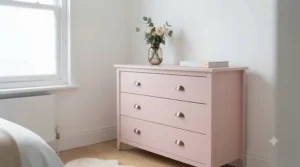
6. Junior Vida Neptune 5 Drawer Chest (Blue & Oak) — best matching pick for a boys bedroom
Here’s the direct answer for anyone specifically hunting a blue chest of drawers boys bedroom option: this is the sibling product to our top pink pick, built on the identical chassis but finished in a fresh teal-leaning blue against the same warm oak-effect trim. The standout feature is that shared platform — same 5kg-per-drawer weight rating, same wooden inset handles, same chipboard-and-MDF construction — which means you get an evidence-backed, field-tested design rather than a hastily recoloured budget alternative.
Based on the spec comparison, choosing this specifically over a generic “boys” storage unit makes sense if you’re furnishing sibling bedrooms and want visual consistency in build quality between rooms, even while the colour scheme differs. Reviewers consistently note the blue reads as more teal than navy in person, which several parents mention as a plus — it photographs and lights a room more gently than a harsh primary blue.
A common complaint in aggregated feedback, shared with its pink sibling, is that assembly instructions could be clearer on drawer runner alignment, though most reviewers still class the build as manageable within an hour for one adult.
Pros:
- ✅ Identical build quality and weight rating to the top-rated pink sibling
- ✅ Soft teal-blue tone works well for younger boys through to pre-teens
- ✅ Part of a full matching bedroom furniture range
Cons:
- ❌ Assembly instructions on drawer runners could be clearer
- ❌ Same edge-wear pattern as the pink version under heavy daily use
Priced in the same £70-£95 band as its pink counterpart, this is the natural pick for parents furnishing a boys bedroom who want the same reliability without compromising on build quality just because the colour changed.
7. Sorbus 4-Drawer Dresser Storage Tower (Tie-Dye Blue/Pink/Purple) — best for shared or gender-neutral rooms
The standout feature is right there in the name: a genuinely blended tie-dye colourway spanning blue, pink and purple, which sidesteps the “pick a side” problem entirely for families with siblings sharing a room, or parents who’d rather not commit to one gendered palette before their child has expressed a preference of their own. Built with a steel frame and MDF wooden top, with four foldable, removable fabric drawers, it’s a lightweight and genuinely versatile unit.
Based on the spec comparison against single-colour alternatives, this dresser’s appeal is less about capacity — four drawers is on the smaller end of this list — and more about flexibility. It suits a nursery that’ll transition into a toddler room without needing a full colour-scheme overhaul, or a playroom shared by children of different ages and preferences. What most buyers overlook is that the anti-tip design and included wall-mounting hardware make it a genuinely safety-conscious budget choice, not just a stylistic one.
Reviewers consistently describe the tie-dye print as more subtle in person than product photography suggests, with pastel tones rather than a bold clash. A recurring theme in feedback notes the fabric quality is comparable to other budget dressers in this list — functional and easy to clean, but not built for heavy long-term loads.
Pros:
- ✅ Genuinely gender-neutral colourway works for shared or transitional rooms
- ✅ Lightweight, foldable design is easy to assemble and relocate
- ✅ Anti-tip design with wall-mounting hardware included
Cons:
- ❌ Only four drawers, offering less storage capacity than most on this list
- ❌ Fabric drawers aren’t rated for particularly heavy loads
At roughly £40-£60, this is the pick for parents who want one flexible piece of furniture that won’t need replacing the moment a sibling’s preferences change, or the moment your own child’s favourite colour does.
Top 7 Products: Full Comparison
| Product | Drawers | Weight Limit | Assembly | Best For | Price Range |
|---|---|---|---|---|---|
| Junior Vida Neptune (Pink & Oak) | 5 | 5kg/drawer | Flat-pack | Everyday bedroom storage | £70-£95 |
| HOMCOM 9-Drawer (Pink) | 9 | 10kg total | Flat-pack | Toddler toy sorting | Under £45 |
| HOMCOM 6-Drawer Fabric (Pink) | 6 | Light-moderate | Flat-pack | Easy-clean, portable storage | £45-£65 |
| EnHomee 7-Drawer (Pink) | 7 | Moderate | Flat-pack | Tall, growing wardrobes | £60-£90 |
| Isabella High Gloss (Pink & Gold) | 6 | Moderate-heavy | Flat-pack | Teen bedroom statement piece | £150-£220 |
| Junior Vida Neptune (Blue & Oak) | 5 | 5kg/drawer | Flat-pack | Boys bedroom, matching sets | £70-£95 |
| Sorbus 4-Drawer (Tie-Dye) | 4 | Light | Flat-pack | Shared or gender-neutral rooms | £40-£60 |
Looking at the comparison above, the two Neptune chests deliver the most consistent value per pound thanks to their documented per-drawer weight rating and matching range — a rare specification most budget competitors simply don’t publish. If you’re prioritising raw capacity over finish quality, the EnHomee’s seven drawers edge out the field, while the Isabella justifies its considerably higher price purely through finish and longevity rather than storage volume.
Benefits vs Traditional Wardrobe-Only Storage
| Factor | Chest of Drawers | Wardrobe-Only Storage | Best For |
|---|---|---|---|
| Everyday access | Quick, at-a-glance | Requires opening doors, digging | Chest of drawers |
| Small item sorting | Excellent (drawers = categories) | Poor without added organisers | Chest of drawers |
| Hanging clothes | Not suited | Ideal | Wardrobe |
| Floor space needed | Moderate | Larger footprint typically | Chest of drawers |
| Child independence | High — easy to teach tidying | Lower — heavier doors, rails | Chest of drawers |
A chest of drawers and a wardrobe genuinely solve different problems, so this isn’t really an either/or decision for most families — it’s about which one to prioritise first. For younger children still building independent tidying habits, a chest of drawers wins on accessibility; folded clothes in labelled drawers are far easier for a five-year-old to manage than a hanging rail. Once school uniforms and going-out clothes enter the picture, a wardrobe becomes the natural second purchase rather than a replacement.
✨ Don’t Miss These Exclusive Deals!
🔍 Take your girls bedroom storage to the next level with these carefully selected pieces. Click on any highlighted item to check current pricing and availability. These picks will help you create an organised, genuinely lovely room your family will actually enjoy living in!
Practical Usage Guide: Setup, First 30 Days & Maintenance
Getting a new chest of drawers right in the first month sets the tone for years of use, so it’s worth doing properly rather than rushing the box open the day it arrives.
On delivery: unpack on a soft surface — carpet or a blanket — to avoid scuffing the finish before it’s even assembled, and count all hardware against the included list before starting, since a missing screw discovered halfway through is far more annoying than one flagged upfront.
Assembly: most units on this list use standard cam-lock or screw-and-dowel flat-pack construction. Assemble drawer fronts before attaching runners, check every drawer glides freely before final tightening, and never fully tighten one panel before confirming the whole frame is square — a slightly skewed frame at step three becomes a permanently sticking drawer at step ten.
Anchoring: this is the step most commonly skipped, and the one that matters most. Every chest on this list, regardless of material, should be secured to the wall using the included anti-tip hardware, or a separately purchased bracket if none is included. The Royal Society for the Prevention of Accidents flags furniture tip-overs as a genuine and preventable home safety risk, particularly for climbing toddlers, and it takes roughly ten minutes with a drill.
First 30 days — common mistakes: overloading top drawers before the frame has “settled” against the wall; forgetting to check drawer runners are level after the first week of daily use, when minor adjustments are easiest; and skipping the anchor step because “it’s against the wall anyway,” which isn’t the same as being fixed to it.
Ongoing maintenance: wipe wood-effect and gloss finishes with a soft, slightly damp cloth rather than furniture polish, which can build up residue on melamine surfaces over time. Fabric drawers can typically be spot-cleaned or wiped with mild soap solution. Check anchor points every few months, particularly after a house move or deep clean, since walls and fixings can loosen with vacuum knocks over time.
Real-World Scenarios: Which Chest Suits Your Situation?
The toddler just out of a cot: a family with a three-year-old moving into her first proper bedroom, on a tight budget, mainly needs somewhere to sort small clothes and a growing toy collection without a big investment. The HOMCOM 9-Drawer Kids Storage Unit fits neatly here — nine drawers for genuine categorisation, low cost, and light enough that a parent can reposition it solo during a room rearrange.
The primary-schooler with a proper wardrobe now: once school uniform, weekend clothes and hobby kit all need separate homes, capacity and durability start to matter more than novelty. The Junior Vida Neptune (Pink or Blue) is the natural fit — five genuinely weight-rated drawers, a design built to survive several years of daily use, and a matching range if the rest of the room needs furnishing too.
Siblings sharing a room, one girl and one boy: rather than negotiating between two colour schemes, the Sorbus Tie-Dye Dresser sidesteps the debate entirely, or alternatively, the matching Neptune Pink and Blue chests side by side give each child ownership over “their” piece while keeping build quality identical.
The teenager wanting a room refresh: a twelve-year-old redecorating for the first time in years, moving away from primary-school pink toward something that feels more like an adult bedroom, is the ideal buyer for the Isabella High Gloss Chest — the gold trim and gloss finish read considerably older than character-print budget options.
How to Choose a Pink Chest of Drawers for a Girls Bedroom
- Check the weight rating per drawer, not just the total. A published per-drawer limit (like the Neptune’s 5kg) tells you far more about real durability than a vague “sturdy construction” claim.
- Match drawer count to actual storage need, not just price. More drawers isn’t automatically better if each one is too shallow for folded jumpers.
- Consider the age range honestly. Plastic toddler units genuinely outgrow their usefulness by age six or seven; wood-effect chests generally don’t.
- Prioritise anti-tip design and included hardware. Not every budget unit includes wall-mounting brackets as standard — check before you buy, not after.
- Think about room footprint versus height. A taller, narrower unit like the EnHomee suits box rooms; a wider, lower chest suits rooms with more floor space but less height clearance.
- Factor in assembly difficulty realistically. If you’re assembling solo with limited tools, a simpler five-drawer flat-pack beats a nine-drawer unit with more fiddly parts.
- Decide whether the colour needs to “grow” with your child. A softer blush pink like the Neptune ages better into the tween years than a bright, primary pink that can feel babyish by age nine or ten.
Pink vs Blue Chest of Drawers: Girls vs Boys Bedroom Storage
The good news for anyone comparing a pink chest of drawers girls bedroom option against a blue chest of drawers boys bedroom alternative is that, structurally, there’s rarely any real difference beyond the finish. The Junior Vida Neptune range makes this comparison unusually straightforward, since the pink and blue versions share an identical chassis, weight rating and handle design — only the colourway changes.
| Factor | Pink (Girls) Chest | Blue (Boys) Chest |
|---|---|---|
| Build & weight rating | Identical across matched ranges | Identical across matched ranges |
| Colour tone trend | Softer blush pinks trending over bright pink | Teal-leaning blues trending over navy |
| Resale/hand-me-down value | High if tone is neutral-leaning | High if tone is neutral-leaning |
| Room longevity | Longer with muted tones | Longer with muted tones |
Here’s what to weigh: reviewers consistently note that softer, more muted tones in both colourways age better through the tween years than bright, saturated primary colours, simply because a child’s taste shifts but a heavily saturated finish is harder to “grow out of gracefully” than a subtle one. If you’re buying for a baby or very young toddler and want the furniture to last well into their pre-teen years without needing to be repainted or replaced, a muted blush pink or soft teal blue is the more practical long-term choice over a bold, primary-coloured alternative.
Gender Themed Bedroom Furniture: Do You Need to Pick a Side?
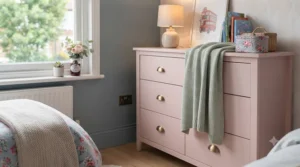
Gender themed bedroom furniture has softened considerably in recent years, and the honest answer to “does it have to be pink or blue” is simply no — plenty of families now opt for shared, neutral, or blended colourways precisely because children’s preferences shift, siblings share rooms, and furniture is expensive enough that you’d rather not repurchase it every time a favourite colour changes. Products like the Sorbus Tie-Dye Dresser exist specifically to answer this brief, offering blue, pink and purple in one unit rather than forcing an early commitment.
That said, there’s nothing wrong with leaning fully into a themed pink or blue room if that’s genuinely what your child wants — the goal of “gender neutral” advice isn’t to discourage colour preference, it’s to avoid assuming a colour on a child’s behalf before they’ve had any say. What most buyers overlook is that furniture, unlike wallpaper or bedding, is the most expensive and hardest-to-change part of a room refresh, so it’s worth choosing a base piece — the chest of drawers itself — in a tone that’ll comfortably outlast a specific themed phase, and then layering in the more overtly gendered or thematic elements through cheaper, easily swapped items like cushions, bedding, and wall art.
Girls Room Storage Ideas Beyond the Chest of Drawers
A chest of drawers is the backbone of most girls’ bedroom storage, but it rarely needs to work alone. Under-bed storage boxes make excellent use of otherwise wasted space for out-of-season clothes or spare bedding, particularly in smaller rooms where floor space for a second freestanding unit simply isn’t available. Wall-mounted shelving keeps books, ornaments and display items off drawer tops entirely, which also reduces the temptation to climb furniture to reach something appealing — a genuine safety win alongside the tidiness benefit.
Hanging fabric organisers, hooked over a wardrobe rail or door, are a low-cost way to sort small accessories like hair bobbles, socks or craft supplies without dedicating a whole drawer to them. A dedicated toy storage bench or ottoman with an integrated lid doubles as extra seating and hidden storage, which is particularly useful in a shared room where floor space needs to multitask. Finally, labelling drawers — even with simple picture labels for a pre-reading child — genuinely speeds up the process of teaching independent tidying, turning “put your clothes away” into a much clearer, achievable task.
Boys Bedroom Furniture on Amazon: What Else to Pair With a Blue Chest
If you’ve landed on the Junior Vida Neptune Blue & Oak chest, or a similar blue chest of drawers boys bedroom pick, the natural next step is coordinating the rest of the room. A matching two-drawer bedside table from the same Neptune range keeps the colour palette consistent without needing to colour-match separately purchased pieces, which can be surprisingly fiddly given how much finishes vary between manufacturers.
A simple wardrobe from the same range or a close colour match handles hanging items the chest of drawers isn’t designed for, while a compact desk unit becomes genuinely useful once homework starts featuring more heavily in daily life. For younger boys, open-fronted toy storage crates or labelled fabric bins pair well alongside a chest of drawers, giving a dedicated home for larger toys that would otherwise overwhelm a drawer’s capacity. As with the girls’ room advice above, it’s generally more cost-effective to keep the core furniture pieces in a durable, slightly muted tone and introduce bolder thematic elements — dinosaur bedding, football-themed cushions, whatever’s currently the favourite — through cheaper, easily replaceable accessories.
Common Mistakes When Buying a Kids’ Chest of Drawers
The most frequent mistake, based on aggregated review themes across this category, is buying for current age rather than the next two to three years of growth — a toddler-specific plastic unit that’s perfect today can be outgrown embarrassingly fast. A second common error is skipping the weight rating entirely, only to discover mid-ownership that a drawer packed with folded jumpers is sagging or sticking because it was never rated to hold that load.
Ignoring anti-tip anchoring is a mistake with genuinely serious safety implications, not just a cosmetic oversight — it’s worth treating as a non-negotiable step regardless of how sturdy a unit looks in the showroom or product photos. Buying purely on colour without checking build material is another frequent regret; a beautifully styled product photo doesn’t tell you anything about whether the drawer runners will still glide smoothly in a year. Finally, underestimating assembly time and difficulty leads plenty of parents to start a build the night before it’s needed, only to find themselves finishing it by torchlight — better to allow a full weekend afternoon, particularly for anything with more than five drawers.
Long-Term Cost & Maintenance
| Product | Approx. Price Range | Expected Lifespan | Maintenance Level |
|---|---|---|---|
| HOMCOM 9-Drawer (Pink) | Under £45 | 2-4 years | Low |
| Sorbus 4-Drawer (Tie-Dye) | £40-£60 | 3-5 years | Low |
| HOMCOM 6-Drawer Fabric | £45-£65 | 3-5 years | Low-Moderate |
| EnHomee 7-Drawer | £60-£90 | 4-6 years | Moderate |
| Junior Vida Neptune (Pink/Blue) | £70-£95 | 6-10 years | Moderate |
| Isabella High Gloss | £150-£220 | 8-15 years | Moderate |
Looking at the comparison above, cost-per-year of ownership actually favours the pricier options more than the sticker price alone suggests. A £45 plastic unit replaced every three years works out to roughly £15 a year before factoring in the hassle of disposal and rebuying; a £90 Neptune chest lasting eight years works out closer to £11 a year, with considerably less environmental waste and disruption along the way. The genuine long-term value winner depends on your child’s age at purchase — younger children benefit more from a durable mid-range chest that’ll actually see them through to their teens, while a toddler-specific budget unit makes more sense as a genuinely short-term bridge purchase.
Features That Actually Matter (And Those That Don’t)
Weight rating per drawer matters enormously and is worth prioritising above almost everything else on this list, since it’s the single best predictor of how a chest will perform after the first year of daily use rather than in the showroom. Most budget and mid-range units on this list use medium-density fibreboard for the core structure, which is genuinely fine for a child’s chest of drawers when properly sealed and edge-banded, despite its slightly less premium reputation compared with solid wood. Anti-tip hardware inclusion matters just as much from a safety standpoint, regardless of how sturdy a unit appears. Drawer runner type — metal glides generally outlasting plastic ones — is a genuinely useful detail worth checking in product descriptions where available.
On the other hand, decorative extras like printed character motifs or elaborate handle shapes matter far less than marketing suggests; they’re the first thing a child outgrows aesthetically, often well before the furniture itself wears out structurally. Similarly, drawer count alone is a weaker signal of quality than it first appears — nine shallow drawers in a lightweight plastic unit don’t necessarily out-perform five properly weight-rated drawers in a sturdier build.
Safety, Regulations & Compliance Guide
Furniture sold in the UK for children’s bedrooms falls under evolving safety frameworks, and it’s worth understanding the basics before buying rather than after. The Furniture and Furnishings (Fire) (Safety) Regulations, most recently amended in 2025, govern flammability standards for domestic furniture sold in the UK, with specific updates affecting baby and young children’s products. While a chest of drawers itself isn’t upholstered furniture in the traditional sense the regulations primarily target, reputable manufacturers still design and label products with these broader safety frameworks in mind.
Tip-over safety is arguably the more immediately relevant concern for a chest of drawers specifically, since these units are exactly the shape and height that curious, climbing children are drawn to. Every product in this guide should be anchored to the wall using the anti-tip hardware provided, or aftermarket brackets where none are included — a step that takes minutes but meaningfully reduces a genuine home safety risk. Beyond anchoring, look for rounded corners on any unit intended for a young child’s room, and check that drawer weight limits are respected in practice, not just noted and forgotten once the furniture’s assembled.
Problem → Solution Guide
Problem: drawers are sticking after a few months of use. Solution: check the unit is genuinely level against the wall, not just visually straight — an uneven floor or slightly loose leg can throw runners out of alignment. A light coating of candle wax or specialist drawer lubricant on wooden runners can also solve this quickly.
Problem: a young child keeps overloading one drawer, causing it to jam. Solution: use labelled dividers or small drawer organisers to naturally limit how much fits in each section, and consider redistributing heavier items like folded jeans to the largest, lowest drawer.
Problem: the chest doesn’t match other furniture already in the room. Solution: rather than replacing everything, choose accessories — drawer pulls, a coordinating rug, or bedding — that bridge the two tones, or select a genuinely neutral piece like the Sorbus tie-dye range that sits comfortably alongside most existing colour schemes.
Problem: worries about safety with a very active toddler. Solution: prioritise anti-tip anchoring above all else, keep tempting items like toys off the top surface, and choose a lower, wider unit over a tall, narrow one wherever floor space allows.
Problem: budget doesn’t stretch to a “forever” chest right now. Solution: buy a genuinely well-reviewed budget option as a bridge purchase, and plan to reallocate it to a playroom, spare room, or hand it down once a more durable piece becomes affordable, rather than overspending now on credit.
Buyer’s Decision Framework
If your child is under four and mainly needs toy sorting, choose a lightweight plastic or fabric-drawer unit, because durability matters less than immediate affordability and ease of use at this age. If your child is between five and ten and building a real wardrobe, choose a mid-range wood-effect chest like the Neptune range, because the weight rating and construction genuinely need to handle daily use for several years. If your child is a tween or teenager wanting a room refresh, choose a premium finish piece like the Isabella, because the aesthetic upgrade matters more at this stage than raw storage capacity. If you’re furnishing a shared or gender-flexible room, choose a neutral or dual-colourway option like the Sorbus dresser, because it avoids an early commitment that might need revisiting.
Frequently Asked Questions
❓ What is the best pink chest of drawers for a girls bedroom on a budget?
❓ How many drawers does a girls bedroom chest of drawers need?
❓ Is a pink or a neutral chest of drawers better for resale value?
❓ Do I need to anchor a child's chest of drawers to the wall?
❓ Can I buy matching pink and blue chests for siblings sharing a room?
Conclusion
Choosing the right pink chest of drawers girls bedroom storage really comes down to matching the product to the life stage, not the prettiest photo. A toddler doesn’t need the same chest as a tween heading toward secondary school, and a family furnishing two children’s rooms at once has different priorities than someone buying one statement piece for a teenager’s refresh. What ties every recommendation in this guide together is the same underlying principle: check the weight rating, prioritise anti-tip safety, and be honest with yourself about how many years you actually want this piece of furniture to last before you’re back here comparing chests of drawers all over again.
Whether you’ve landed on the dependable, well-rated Junior Vida Neptune in pink or blue, the budget-friendly HOMCOM options, the tall and practical EnHomee, the genuinely flexible Sorbus tie-dye pick, or the grown-up Isabella for an older child’s room, each option on this list earns its place through real specifications and honest trade-offs, not just a coat of on-trend paint. Take the time to measure your space, check the weight rating against what you’ll actually store, and anchor it to the wall the day it’s built — future you, and your child, will genuinely thank you for it.
Recommended for You
- 7 Best Kids Character Chest of Drawers for 2026 (Reviewed)
- Colourful Chest of Drawers Toddler: 7 Best Picks for 2026
- Anti Tip Chest of Drawers Toddler: 7 Safest Picks for 2026
Disclaimer: This article contains affiliate links. As an Amazon Associate, I earn from qualifying purchases. If you purchase products through these links, we may earn a small commission at no additional cost to you.
✨ Found this helpful? Share it with your friends! 💬🤗
