
In This Article
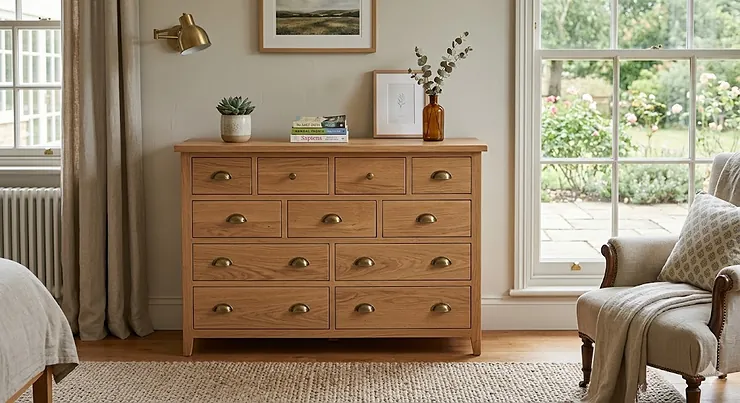
A 12 drawer chest is an expansive storage unit featuring twelve individual compartments, designed to maximise bedroom organisation whilst occupying minimal floor space. Unlike traditional wardrobes or smaller chests, these units offer compartmentalised storage that keeps clothing, linens, and accessories neatly separated and easily accessible. The beauty of a 12 drawer configuration lies in its versatility — you can dedicate drawers to specific categories, from folded jumpers and jeans to undergarments, socks, and seasonal items that need tucking away during Britain’s unpredictable weather shifts.
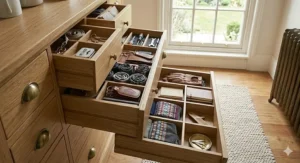
What most UK buyers overlook is how these units transform cramped British bedrooms. In a typical semi-detached house where every square metre counts, a well-chosen 12 drawer chest delivers wardrobe-level capacity without the footprint of a full closet system. They’re particularly brilliant for couples sharing a room, families downsizing from larger properties, or anyone converting a box room into functional sleeping quarters. The horizontal layout works beautifully against walls that can’t accommodate tall furniture, whilst the substantial drawer count means you’re not constantly playing Tetris with folded clothes.
The UK market has evolved considerably beyond basic chipboard boxes. Modern 12 drawer chests now feature reinforced metal frames, moisture-resistant finishes essential for damp British winters, and smooth-glide drawer mechanisms that won’t jam when you’re rushing to get dressed on a drizzly Monday morning. According to research from Mintel, nearly six in ten UK consumers have purchased bedroom furniture in the past three years, with storage solutions becoming increasingly important as housing costs drive more people into compact living spaces. Whether you’re furnishing a master bedroom in Manchester or a rental flat in Bristol, understanding the nuances between fabric, wooden, and composite options helps you avoid buyer’s remorse.
Quick Comparison: Top 12 Drawer Chests Available in the UK
| Product Type | Approximate Price | Material | Best For | Key Advantage |
|---|---|---|---|---|
| SONGMICS Fabric Dresser | £60-£90 | Metal frame, fabric drawers | Budget-conscious buyers, renters | Lightweight, easy assembly |
| Gabriel White Gloss | £180-£250 | High-gloss MDF | Modern aesthetics, couples | Maximum drawer capacity |
| Wooden Mid-Century Style | £300-£450 | Solid oak/walnut | Premium buyers, longevity | Timeless design, durability |
| HOMCOM Industrial Style | £100-£150 | Steel frame, wood-effect top | Mixed storage needs | Open shelves + drawers |
| Fabric Tower Organisers | £50-£80 | Non-woven fabric, steel | Small spaces, temporary solutions | Collapsible, portable |
| Wide Double Dresser | £200-£350 | Engineered wood, solid legs | Large bedrooms, TV stand use | Extra surface space |
| Tool Chest Conversion | £150-£280 | Heavy-duty steel | Garages, workshops | Lockable, wheeled mobility |
💬 Just one click — help others make better buying decisions too! 😊
Top 7 12 Drawer Chest Solutions: Expert Analysis
1. SONGMICS 10-Drawer Wide Storage Dresser
Though marketed as 10-drawer, SONGMICS offers modular fabric systems that combine to create 12-drawer configurations, making this a clever workaround for UK buyers seeking maximum storage. The rustic brown and black finish suits contemporary interiors whilst the metal frame construction provides surprising stability for a fabric-based unit. Dimensions typically measure around 100 cm wide by 98 cm high, fitting comfortably beneath standard bedroom windows without blocking natural light.
What sets this apart is the cationic fabric used for drawer fronts — noticeably superior to cheap non-woven alternatives that sag after six months. The material resists wrinkling and maintains its shape through Britain’s humid summers, whilst the waterproof wooden top surface handles the inevitable tea mug rings from lazy Sunday mornings. UK reviewers consistently praise the assembly process, which takes roughly 45 minutes with clear instructions and pre-labelled components.
In my experience, this configuration works brilliantly for couples who need separate “his and hers” storage zones. Allocate six drawers each, and you’ll never again face the morning argument about whose socks belong where. The anti-tip kit included is non-negotiable for homes with children or pets — British health and safety standards rightly emphasise secure mounting, particularly on uneven Victorian floorboards common in older properties.
UK buyers should note: Fabric drawers won’t withstand the weight of heavy winter coats or wet towels. Stick to folded clothing, accessories, and lightweight linens. The breathable design actually proves advantageous in damp climates, preventing that musty smell that plagues sealed wooden drawers during prolonged rainy periods.
✅ Lightweight design (easy to relocate)
✅ Budget-friendly for the storage capacity
✅ Anti-tip safety kit included
❌ Fabric drawers not suitable for heavy items
❌ Requires wall mounting for stability
Price range: Around £60-£90 | Value verdict: Exceptional for renters and temporary housing solutions
2. Gabriel 12-Drawer White Gloss Dresser (8+4 Configuration)
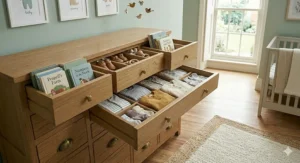
This European-manufactured unit represents the premium end of composite furniture, featuring a striking 8+4 drawer layout — eight standard drawers stacked vertically with four smaller compartments above. At 180 cm wide and 92 cm high, it commands presence in larger bedrooms whilst the white gloss finish reflects light beautifully, making smaller British bedrooms feel more spacious. The shallow 33 cm depth proves ideal for terraced houses where protruding furniture encroaches on circulation space.
The high-gloss MDF construction uses P2-grade materials that meet stringent European formaldehyde emission standards — crucial for bedroom furniture where you’re breathing the same air for eight hours nightly. Unlike cheaper gloss units that show fingerprints within hours, Gabriel’s finish includes a protective coating that wipes clean with a damp cloth, essential when you’re dealing with the dusty aftermath of British construction work next door or seasonal pollen invasions.
What most buyers discover only after purchase is how the 8+4 configuration perfectly suits couples with different storage needs. The eight larger drawers (approximately 16.5 cm high each) accommodate bulkier items like folded jeans, jumpers, and gym gear, whilst the four smaller compartments keep accessories, undergarments, and tech cables organised. The smooth metal runners handle the British tendency to overstuff drawers better than budget alternatives that stick after six months.
UK-specific consideration: This arrives flat-packed from European suppliers, so factor in 2-3 hours for assembly and ensure you’ve got a second person for the lifting. The weight (around 40-50 kg when assembled) makes solo installation inadvisable, particularly on carpeted bedrooms where you’ll need precise positioning before loading the drawers. All furniture sold in the UK must comply with British fire safety regulations for upholstered components, so verify proper certification documentation with your supplier.
✅ Modern aesthetic suits contemporary homes
✅ White gloss brightens small bedrooms
✅ P2-grade materials (low formaldehyde)
❌ Shows dust and requires regular wiping
❌ Heavy assembly requires two people
Price range: £180-£250 | Value verdict: Premium quality justified for permanent installations
3. Mid-Century Solid Wood 12-Drawer Chest
Handcrafted from American solid oak or walnut, these artisan pieces represent investment furniture that outlasts trends and ownership changes. Measuring approximately 180 cm wide by 91.5 cm high, the proportions echo classic mid-20th century Scandinavian design whilst the hand-applied linseed oil finish showcases natural wood grain that deepens beautifully over years. Each drawer features dovetail joinery — the hallmark of quality cabinetry that British furniture makers have respected for centuries.
The weight (80 kg for walnut, 100 kg for oak) tells you everything about construction quality. These aren’t units you’ll relocate on a whim; they’re furniture pieces you position once and enjoy for decades. The substantial mass actually proves advantageous in British homes with creaky floorboards or upstairs bedrooms — the weight stabilises the unit naturally without excessive wall mounting, though anti-tip brackets remain sensible for households with children.
What justifies the premium price is longevity and repairability. Isolated scratches or damaged areas receive spot treatment with matching oil rather than requiring complete replacement. The eco-friendly finish contains zero volatile organic compounds (meeting British indoor air quality standards) and achieves food-contact compliance certifications — reassuring when you’re storing baby clothing or items for family members with chemical sensitivities.
For UK climate resilience: Solid wood naturally regulates moisture, expanding and contracting with seasonal humidity changes without warping. This self-adjusting property means drawers that glide smoothly year-round, unlike engineered alternatives that swell shut during damp November spells then rattle loose come February’s dry central heating season. The UK Furniture and Furnishings (Fire Safety) Regulations require all furniture to meet stringent fire resistance standards, ensuring your investment meets British safety requirements.
✅ Heirloom quality construction
✅ Natural moisture regulation
✅ Repairable finish for longevity
❌ Substantial weight limits repositioning
❌ Premium pricing (£300-£450 range)
Price range: £300-£450 | Value verdict: Cost-per-year exceptional for permanent homes
4. HOMCOM 8-Drawer Industrial Fabric Dresser
HOMCOM’s industrial-style approach combines eight fabric drawers with open shelving, creating a hybrid storage solution particularly suited to UK bedrooms that double as home offices or craft spaces. The grey wood-effect finish and steel frame construction echo warehouse aesthetics whilst maintaining bedroom-appropriate softness through fabric drawer fronts. Typical dimensions measure around 116 cm high by 45 cm wide, offering vertical storage that maximises limited floor space.
The open shelf concept addresses a genuine UK household need — where do you store items requiring quick access but not full drawer dedication? Books awaiting bedside reading, the CPAP machine your GP prescribed, or craft supplies for evening projects all find logical homes on these shelves without cluttering drawer space. British buyers appreciate this flexibility during our long, dark winters when indoor hobbies become essential entertainment.
Assembly proves refreshingly straightforward with HOMCOM’s colour-coded component system. Most UK customers report 30-40 minute build times working solo, considerably faster than comparable units requiring partner assistance. The anti-tipping straps attach to walls via standard UK cavity fixings (included), though solid wall mounting requires different plugs available from any Screwfix or Toolstation.
Brexit consideration: HOMCOM products now ship from UK warehouses following post-2021 supply chain adjustments, meaning faster delivery to Scottish Highlands and Northern Irish addresses than pre-Brexit EU imports. Prime members typically receive next-day delivery across mainland Britain, though island communities should expect standard 3-5 working days.
✅ Hybrid drawer/shelf versatility
✅ Vertical design suits small rooms
✅ Quick solo assembly (30-40 mins)
❌ Eight drawers may insufficient for couples
❌ Fabric drawers limit storage weight
Price range: Around £100-£150 | Value verdict: Smart choice for multi-purpose bedrooms
5. WLIVE 12-Drawer Tall Fabric Tower
WLIVE’s tower configuration takes vertical storage to impressive heights — literally. At approximately 145 cm tall, this narrow-footprint design suits British bedrooms where width constraints prevent traditional wide dressers. The twelve fabric drawers stack in a 3-wide by 4-high arrangement, delivering wardrobe-level capacity in a footprint barely larger than a bedside table. Rustic brown wood-grain prints camouflage the synthetic materials effectively, maintaining visual warmth without solid wood’s expense.
The genius of this configuration emerges during British house moves. Unlike unwieldy wide dressers requiring furniture removal specialists, the WLIVE tower disassembles to component parts fitting inside a family car. Renters moving between London zones or students relocating between university terms particularly value this portability — assemble in your new bedroom within 45 minutes rather than wrestling hired vans through narrow Victorian doorways.
Drawer depth measures around 28 cm, sufficient for most folded clothing but requiring strategic organisation. Roll garments military-style rather than traditional stacking to maximise space and maintain visibility. The technique transforms drawer capacity whilst preventing that frustrating phenomenon where retrieving bottom items destroys your entire organisation system.
Damp-climate advantage: The breathable fabric construction actually prevents moisture accumulation that plagues sealed wooden drawers in British coastal towns or poorly ventilated flats. Stored clothing emerges fresh rather than musty, eliminating the need for those silica gel packets cluttering wardrobe corners.
✅ Minimal floor footprint (ideal small rooms)
✅ Portable design for frequent movers
✅ Breathable storage prevents mustiness
❌ Tall profile requires secure wall mounting
❌ Shallow drawers need organisation skills
Price range: £70-£110 | Value verdict: Perfect for renters and student accommodation
6. Wide Double Dresser (12-Drawer Combination)
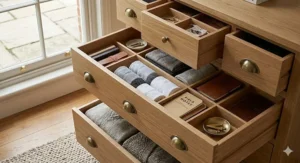
These expansive units typically combine two six-drawer sections side by side, creating a cohesive 12-drawer system spanning 160-180 cm width. Engineered wood construction with solid legs provides stability whilst the wide top surface (often 40+ cm deep) doubles as TV stand, display area, or dressing table. Oak, walnut, and white finishes predominate, easily coordinating with existing British bedroom furniture ranges from mainstream retailers.
The double dresser configuration proves transformative for couples managing shared bedroom space. Visual separation between “his” and “her” sections reduces morning conflicts whilst the generous top surface accommodates matching lamps, photo frames, or that essential British bedroom fixture — the tea tray station complete with kettle and biscuit tin. Some models now incorporate integrated power outlets and USB ports, recognising modern households’ charging station requirements.
Ball-bearing drawer glides represent the quality differentiator in this category. Budget models use basic metal tracks that stick when drawers carry realistic clothing weights; premium alternatives employ full-extension ball-bearing systems that glide smoothly even when stuffed beyond recommended capacity (as British households inevitably do). The upgrade costs perhaps £30-50 more but transforms daily usability across decades.
Space planning: Measure your bedroom wall carefully before purchasing. These units require approximately 15-20 cm clearance behind for drawer opening, plus additional space for comfortable movement. British building regulations recommend 75 cm circulation space around bedroom furniture — achievable in most double bedrooms but tight in converted box rooms or studio flats.
✅ Couples-friendly dual-section design
✅ Wide top serves multiple functions
✅ Ball-bearing glides (premium models)
❌ Substantial width requires large bedrooms
❌ Heavy assembly (typically 2-person job)
Price range: £200-£350 | Value verdict: Best value for shared bedrooms with adequate space
7. LARBANKE 12-Drawer Tool Chest (Bedroom Conversion)
Unconventional yet surprisingly effective, professional-grade tool chests offer bedroom storage solutions that mainstream furniture overlooks. LARBANKE’s combination unit features locking drawers, 360-degree brake wheels, and stainless steel construction designed for workshop environments but equally suited to bedrooms requiring secure storage. The flat stainless steel top provides an ultra-durable surface that won’t water-ring or scratch, whilst the pearl cotton padding prevents contents sliding during movement.
What makes tool chests compelling for bedroom use is security and mobility. The key-locking system protects valuables, prescription medications, or sensitive documents — particularly relevant in house shares or rental properties with changing flatmates. The wheeled design transforms cleaning day ease; roll the unit aside for proper hoovering rather than awkwardly vacuuming around static furniture. British households with mobility challenges particularly appreciate this feature.
Drawer depth varies between the 5-drawer (10.95 cm deep) and 7-drawer (7.7 cm deep) components, creating perfect compartmentalisation for different storage needs. Shallow drawers suit jewellery, watches, and accessories whilst deeper sections accommodate folded clothing or tech equipment. The modular design allows horizontal connection of multiple units, expanding storage as needs evolve without replacing entire systems.
UK garage dual-purpose: Many British homeowners position these units strategically between bedroom and garage/utility room use. Store seasonal clothing during summer months then convert to tool storage during winter DIY projects. The powder-coated steel finish resists moisture far better than wooden alternatives in unheated British garages.
✅ Lockable security for valuables
✅ Wheeled mobility for cleaning
✅ Steel construction withstands damp
❌ Industrial aesthetic doesn’t suit all décor
❌ Premium pricing (£150-£280)
Price range: £150-£280 | Value verdict: Unique solution for security-conscious buyers
How to Choose the Right 12 Drawer Chest for Your UK Home
Selecting appropriate bedroom storage requires balancing competing priorities — budget constraints, available space, aesthetic preferences, and long-term durability. British homes present unique challenges that influence these decisions. Victorian terraced houses feature narrow doorways and steep staircases limiting delivery options. Post-war semis offer generous bedroom dimensions but often lack built-in storage. Modern new-builds maximise floor space efficiency, demanding furniture that doesn’t overwhelm compact rooms.
Start with accurate measurements. British estate agents’ creative “bedroom” classifications mean you might be furnishing anything from a 4×3 metre box room to a proper master suite. Measure wall width where you intend positioning the chest, then subtract 20 cm for comfortable drawer operation and circulation space. Height matters equally — low ceilings in period conversions make tall tower units feel oppressive, whilst standard 2.4 metre ceilings accommodate most configurations comfortably.
Material selection impacts longevity and maintenance. Solid wood pieces suit permanent homes where you’ll appreciate compounding value over decades. Engineered wood with quality veneers balances durability and affordability, performing admirably through typical 5-10 year ownership periods. Fabric options excel for temporary situations or households requiring lightweight, portable solutions during frequent relocations.
Consider British climate realities when evaluating materials. Coastal properties or homes lacking adequate heating systems expose furniture to moisture extremes. Solid wood naturally regulates humidity; engineered alternatives require moisture-resistant finishes; fabric options need breathable construction preventing mildew. Your postcode genuinely influences optimal material choice — what thrives in dry East Anglia struggles in damp Cornwall. For additional guidance on choosing bedroom storage suited to British homes, the IKEA UK bedroom storage guide offers practical insights on maximising space in typical UK properties.
Drawer mechanisms separate quality from compromise. Ball-bearing metal runners glide smoothly through years of daily use and British households’ tendency toward overloading. Basic wood-on-wood slides stick after months, particularly when seasonal humidity causes timber expansion. Centre-mounted metal tracks occupy a middle ground — functional but requiring occasional lubrication. Pull several drawers fully open during showroom inspection; resistance indicates future frustration.
Assembly complexity varies wildly. Simple fabric towers assemble solo in 30-45 minutes with basic tools. Substantial wooden chests demand two-person lifting and 2-3 hour commitment following detailed instructions. British flats with narrow staircases sometimes necessitate room-by-room component delivery rather than pre-assembled units. Factor professional assembly costs (typically £50-100) if DIY proves impractical — cheaper than repairing walls damaged during amateur installation attempts.
UK-specific regulatory compliance matters for households with children. Anti-tip kits aren’t optional extras but essential safety equipment mandated by British safety standards. Wall mounting proves challenging in rental properties with restrictive tenancy agreements; seek freestanding units with low centre of gravity or negotiate written permission for appropriate wall fixings. Landlords increasingly appreciate secure furniture mounting, recognising it prevents damage during tenancies. The UK General Product Safety Regulations 2005 ensure all furniture meets minimum safety requirements for British consumers.
Common Mistakes When Buying 12 Drawer Chests in the UK
British consumers repeatedly make predictable errors when selecting bedroom storage, often discovering problems only after delivery vans depart. Learning from others’ experiences saves money, frustration, and that peculiar embarrassment of admitting furniture defeat to smug relatives who “tried to warn you.”
Ignoring doorway dimensions ranks as the most common oversight. Measure your narrowest access point — typically the front door or internal doorway leading to your bedroom. British Victorian terraces feature notoriously narrow entrances (sometimes 75 cm or less), whilst modern homes employ wider 80-90 cm standards. Flat-packed furniture navigates these constraints easily; pre-assembled units require professional delivery teams familiar with British property challenges. Factor £30-80 for specialist delivery if standard courier services can’t guarantee access.
Underestimating assembly complexity afflicts optimistic buyers annually. Marketing descriptions like “easy assembly” mean different things to manufacturers and exhausted British homeowners wrestling incomprehensible instructions at 10 PM on a Sunday. Read verified purchaser reviews specifically mentioning assembly time and difficulty. Comments like “managed alone in an hour” or “needed partner and three hours” provide realistic expectations beyond manufacturers’ optimistic estimates.
Overlooking UKCA certification for electrical features risks safety and insurance complications. Chests incorporating LED lights, power outlets, or USB charging require proper British electrical certification post-Brexit. CE marking alone no longer suffices for UK compliance. Verify UKCA labels on any electrically-enhanced furniture to avoid potential hazards or insurance claim complications following incidents.
Assuming “bedroom storage” means clothing exclusively limits utility potential. British households increasingly use bedroom furniture for mixed purposes — craft supplies, home office equipment, seasonal decorations, or hobby materials. Consider whether rigid drawer configurations accommodate your actual storage needs or if adjustable shelving combinations prove more practical. The tool chest example demonstrates how non-traditional furniture sometimes outperforms conventional bedroom pieces.
Neglecting weight distribution causes structural failures and floor damage. British properties vary enormously in floor construction — solid Victorian timbers handle substantial weight; modern engineered joists require careful loading consideration, particularly in upper-floor bedrooms. Distribute heavy items across multiple drawers rather than concentrating weight in bottom sections. Antique jewellery collections, extensive book libraries, or tech equipment accumulations need strategic placement preventing drawer collapse or floor sagging.
Forgetting British delivery timeframes leads to frustration. Amazon Prime’s next-day delivery spoils expectations, but furniture often requires 5-10 working days particularly for items shipping from European suppliers or manufactured to order. Island communities (Scottish Highlands, Northern Ireland, Isle of Wight) face additional 3-5 day delays. Plan purchases around house moves or redecoration schedules allowing comfortable margins rather than depending on optimistic delivery estimates.
Prioritising aesthetics over functionality proves costly long-term. That stunning white gloss chest photographs beautifully but shows every fingerprint and requires constant cleaning. Ultra-shallow drawers create magazine-worthy minimalist aesthetics whilst rendering actual storage impossibly awkward. British pragmatism serves you better than Instagram inspiration when selecting furniture enduring daily family use through unpredictable weather and hectic lifestyles. For independent product testing and reviews, Which? offers trusted consumer guidance on furniture purchases, helping British buyers make informed decisions.
Real-World Performance in British Conditions
British homes test furniture durability through unique environmental challenges absent in Mediterranean or Scandinavian contexts. Understanding how 12 drawer chests perform across British seasons and property types prevents disappointment and informs smarter purchasing decisions based on your specific circumstances rather than generic marketing promises.
Moisture management proves critical. Britain’s maritime climate delivers persistent humidity year-round, spiking during autumn and winter months when external temperatures drop whilst internal heating creates condensation. Solid wood naturally absorbs and releases moisture, maintaining equilibrium with ambient conditions. This self-regulation prevents the warping and sticking that plagues cheaper engineered alternatives. Fabric units’ breathable construction actually advantages British climates, preventing the musty odour accumulating in sealed wooden drawers during prolonged damp periods.
Coastal properties face amplified challenges. Salt-laden air accelerates metal corrosion on drawer runners and handles unless properly protected. Stainless steel or powder-coated alternatives withstand maritime environments far better than basic zinc plating common on budget furniture. Position units away from external walls where condensation concentrates, and ensure adequate bedroom ventilation preventing moisture accumulation that damages both furniture and stored clothing.
Heating system compatibility influences material selection. British central heating cycles create dramatic humidity fluctuations as radiators blast dry heat then cool overnight. Engineered wood with quality veneers handles these cycles acceptably; budget chipboard alternatives crack and delaminate within seasons. If your bedroom radiator sits beneath the intended furniture location, choose materials tolerating temperature variations or reposition radiators (a £150-300 plumber job but worthwhile for furniture longevity).
Victorian property considerations extend beyond romantic aesthetics. Uneven floors plague period homes, causing freestanding furniture to wobble frustratingly. Adjustable feet (standard on quality units) compensate for irregularities, whilst anti-tip wall mounting becomes essential rather than optional. Original floorboards creak and flex under substantial furniture weight; distribute load using furniture pads rather than concentrating pressure through narrow legs that dent flooring and create squeaking nightmares during midnight bathroom trips.
Modern new-build challenges differ markedly. Engineered floor joists suit calculated loading limits; excessive furniture weight in upstairs bedrooms risks structural deflection. Manufacturers’ weight specifications become relevant — a fully-loaded solid wood chest exceeding 150 kg might suit ground-floor bedrooms but warrants caution above. Stud partition walls require specialist fixings for secure anti-tip mounting rather than standard cavity plugs; consult a handyman if uncertain (typically £40-60 for professional mounting).
Seasonal clothing rotation suits British weather unpredictability beautifully. Dedicate upper drawers to current-season items whilst lower sections store off-season clothing. Come September, swap summer garments for autumn/winter wear in a satisfying ritual that British households perfect over decades. The 12-drawer capacity makes this rotation effortless compared to smaller units requiring constant wardrobe reshuffling as weather patterns shift erratically. For additional small bedroom storage strategies suited to British homes, The Bonnie Home’s guide offers practical advice tailored to UK property constraints.
Urban versus rural locations influence security and mobility requirements. City flats benefit from lockable drawer systems protecting valuables during viewing appointments for future lettings or when hosting social gatherings. Rural properties spread across multiple buildings appreciate wheeled units transferring easily between bedroom and utility storage as seasonal needs shift. Neither environment proves “better” for furniture selection; acknowledging your specific context guides appropriate choices.
Long-Term Cost Analysis in the UK
British consumers increasingly recognise that purchase price represents merely initial investment in furniture expected to serve 5-20 year lifespans. Total cost of ownership calculations incorporating maintenance, replacement cycles, and disposal costs reveal true economic value often inversely related to upfront pricing.
Budget fabric units (£50-£90) suit temporary situations brilliantly but rarely survive beyond 3-5 years under normal family use. Fabric deteriorates, drawer frames distort, and the breathable construction that prevents mustiness simultaneously allows dust infiltration requiring frequent cleaning. For renters moving every 1-2 years, this disposability proves advantageous — donate worn units to charity shops rather than relocating them. University students and young professionals maximise value from these economical options before upgrading to permanent housing.
Calculate cost-per-year for realistic comparison: £70 fabric unit surviving three years costs £23.33 annually. Replacement cycling means purchasing 3-4 units across a 15-year period, totalling £210-280 plus disposal hassles. Environmental considerations increasingly matter to British consumers; short-lifespan furniture contributes to landfill issues that conscientious households aim reducing.
Mid-range engineered wood (£120-£250) occupies the value sweet spot for established households expecting 5-10 year occupancy. Quality veneers withstand daily use whilst ball-bearing drawer mechanisms maintain smooth operation through realistic loading. Maintenance proves minimal — occasional furniture polish and tightening loose handles after several years. Disposal or resale retains reasonable value; well-maintained units find ready buyers through Facebook Marketplace or Gumtree, recovering £40-80 against replacement costs.
Annual cost analysis: £180 purchase serving eight years equals £22.50 yearly, comparable to budget alternatives but delivering superior daily experience and resale value. Factor £15-20 for replacement handles or drawer liner upgrades midway through ownership, still maintaining excellent value proposition. These units justify investment for homeowners or long-term renters planning multi-year occupancy.
Premium solid wood (£300-£450) represents generational investment suiting permanent homes. Decades-long lifespan means cost-per-year dropping to £15-22 across 20-year ownership, exceptional value for furniture appreciating aesthetically as wood patinas naturally. Maintenance requirements include periodic oil treatment (£25 every 3-5 years) and occasional drawer adjustment as timber settles. British furniture restoration specialists easily repair isolated damage, extending useful life beyond original expectations.
Resale value remains strong; quality wooden furniture finds enthusiastic vintage and antique markets. Well-maintained pieces command 40-60% original pricing even after 15-20 years, offsetting substantial initial investment. Environmental credentials appeal to eco-conscious British consumers; sustainably-sourced solid wood furniture avoids disposable culture whilst supporting responsible forestry practices.
Hidden costs merit consideration across all price brackets. Delivery fees range £30-100 depending on courier requirements and accessibility challenges. Assembly services cost £50-100 for complex units if DIY proves impractical. Wall mounting supplies (appropriate plugs, drill bits, stud finders) add £15-30 for renters lacking equipped toolboxes. Drawer organisers or lining materials (£20-40) optimise storage efficiency but represent additional investment beyond base purchase price.
Insurance implications occasionally arise. High-value furniture increases contents insurance requirements; notify insurers when acquiring pieces exceeding £1,000 individual value to maintain coverage adequacy. Conversely, quality furniture sometimes qualifies for premium reductions as insurers view substantial investment in home furnishings as responsible risk management indicating careful property maintenance.
12 Drawer Chest vs Traditional Wardrobes
British bedrooms increasingly favour modular storage combinations over single-solution approaches, recognising that different garment types demand different storage methods. Understanding comparative strengths helps determine whether 12 drawer chests, traditional wardrobes, or hybrid systems best serve your household’s specific requirements.
Space efficiency tilts heavily toward drawer-based systems in modern British homes. A 12 drawer chest measuring 180 cm wide by 40 cm deep by 90 cm high stores comparable clothing volume to a full-height wardrobe occupying 180 x 60 x 200 cm dimensions. The wardrobe’s vertical reach suits hanging garments brilliantly but wastes overhead space British bedrooms increasingly cannot afford. Drawer systems maximise useful capacity within standard ceiling heights whilst maintaining comfortable proportions preventing furniture domination.
Accessibility patterns differ markedly. Wardrobes require standing access and arms-length reaching for items stored at height or depth. Drawer systems bring everything to waist height or below, suiting households with mobility challenges or shorter family members. Elderly British residents particularly appreciate drawer storage eliminating stepladder requirements and awkward overhead reaching that risks falls. Children’s bedrooms benefit from drawer configurations allowing independent organisation without parental assistance retrieving hanging items.
Clothing protection advantages wardrobes for formal wear requiring wrinkle-free hanging. Business suits, evening dresses, and delicate fabrics suffer in drawers despite careful folding. However, casual British lifestyles increasingly emphasise folded casual wear over formal hanging garments. Weekend jeans, jumpers, athleisure, and the practical weatherproof layers British climates demand all store perfectly in drawers, often emerging less creased than hanging alternatives crushed together in overfilled wardrobes.
Climate control proves easier with enclosed wardrobe systems protecting garments from dust, humidity fluctuations, and light exposure that fades colours over time. Drawer systems expose contents during opening but the brief exposure proves negligible compared to open shelving. Quality drawer construction incorporating dust seals and smooth-closing mechanisms minimises exposure whilst maintaining accessibility. British homes with adequate heating and ventilation find drawer storage perfectly suitable for everyday clothing protection.
Visual impact varies by personal aesthetics. Wardrobes create vertical statements in bedrooms, either imposing or elegant depending on design quality and room proportions. Drawer systems maintain horizontal profiles that ground visual weight whilst allowing wall space above for artwork, mirrors, or decorative elements British interiors traditionally favour. Modern minimalist aesthetics often prefer drawer systems’ clean lines over wardrobes’ bulky presence.
Cost comparison typically favours drawer systems at equivalent capacity. Quality freestanding wardrobes matching 12 drawer chest storage volume command £350-600 pricing, while fitted wardrobes escalate to £1,000-3,000 depending on customisation. Drawer chests delivering comparable practical capacity cost £150-450, representing substantial savings permitting budget allocation toward complementary bedroom furnishings or other household priorities.
Hybrid solutions increasingly dominate British bedrooms combining both approaches. A modest single wardrobe (£150-250) handles formal hanging items whilst a 12 drawer chest manages casual folded wear, creating comprehensive storage ecosystems under £400-500 total investment. This combination suits modern lifestyles requiring varied storage types whilst respecting budget constraints and space limitations common in British housing stock.
FAQ
❓ Are 12 drawer chests suitable for small British bedrooms?
❓ What's the difference between fabric and wooden 12 drawer chests?
❓ How do I prevent drawer sagging in fabric units?
❓ Do 12 drawer chests require professional assembly in the UK?
❓ Are UKCA markings necessary for bedroom furniture?
Conclusion: Finding Your Perfect 12 Drawer Chest
British households deserve storage solutions matching our unique combination of compact housing, unpredictable climate, and practical lifestyle demands. The 12 drawer chest category offers remarkable versatility spanning budget-friendly fabric towers perfect for temporary housing through premium solid wood investments becoming family heirlooms. Your optimal choice depends less on absolute “best” rankings than alignment between product characteristics and your specific circumstances.
For renters and frequent movers, fabric-based systems like the SONGMICS or WLIVE towers deliver unbeatable value. Light weight enables solo relocation whilst breathable construction prevents the mustiness plaguing British storage. Accept the 3-5 year lifespan as appropriate trade-off for initial £60-£90 pricing and portability enabling stress-free relocations between properties.
Established homeowners maximise value from mid-range engineered wood alternatives like the Gabriel White Gloss or Wide Double Dressers. The £150-£250 investment delivers 8-12 year reliable service whilst ball-bearing drawer mechanisms maintain smooth operation through realistic British household loading. These units balance quality construction with reasonable pricing, suiting families planning extended occupancy without requiring generational commitment.
Premium buyers valuing longevity and sustainability should investigate solid wood options despite £300-£450 pricing. The cost-per-year calculation across 20+ year ownership reveals exceptional value whilst environmental credentials satisfy eco-conscious principles. Natural moisture regulation suits British climate challenges brilliantly, whilst timeless mid-century aesthetics transcend temporary trends.
Security-conscious households or those requiring mobility appreciate unconventional solutions like the LARBANKE Tool Chest. Lockable drawers protect valuables whilst wheeled designs transform cleaning and seasonal reorganisation. The industrial aesthetic won’t suit every bedroom but functionality trumps conventional furniture limitations for practical British households.
Remember that purchase price represents merely initial investment. Factor assembly costs, delivery fees, maintenance requirements, and eventual disposal into total ownership calculations. The cheapest upfront option rarely proves most economical across realistic ownership periods, whilst premium investments justify costs through longevity and superior daily experience.
Your bedroom deserves storage solutions working as hard as you do navigating British life’s practical demands. Whether furnishing a cosy terraced house in Leeds, a modern flat in Edinburgh, or a period property in Bath, the right 12 drawer chest transforms cluttered chaos into organised calm — rather worth the research investment ensuring you select wisely.
Recommended for You
- 7 Best 10 Drawer Chest Small Footprint UK 2026
- Best 10 Drawer Chest UK 2026 (Honest Reviews)
- 7 Best 8 Drawer Chest for Small Bedroom | 2026 UK Guide
Disclaimer: This article contains affiliate links. As an Amazon Associate, I earn from qualifying purchases. If you purchase products through these links, we may earn a small commission at no additional cost to you.
✨ Found this helpful? Share it with your mates! 💬🤗
