
In This Article
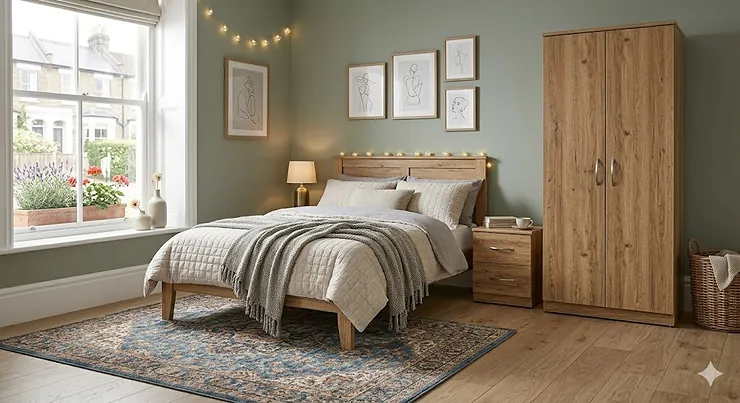
A value bedroom furniture set is a coordinated collection of essential bedroom storage pieces sold as a package at a budget-friendly price point, typically including a wardrobe, chest of drawers, and bedside table. These affordable complete bedroom packages deliver matched styling and bundled savings whilst meeting basic storage needs for UK homes. Rather than purchasing individual pieces separately at a higher total cost, these bedroom furniture bundle deals offer cohesive design and practical functionality in the £200-£500 range, making them particularly attractive for first flats, rental properties, guest rooms, or anyone furnishing a bedroom on a sensible budget.
Quick Comparison: Top Value Bedroom Furniture Sets UK
| Set | Pieces | Price Range | Material | Best For |
|---|---|---|---|---|
| Vida Designs Riano 3-Piece | Wardrobe, 4-drawer chest, bedside | £170-£230 | MDF/particleboard | Ultra-tight budgets, small spaces |
| GFW Boston 3-Piece | 2-door wardrobe, 4-drawer chest, bedside | £270-£330 | Engineered wood | Mid-budget, various colours |
| Nera 3-Piece Matt | Wardrobe, 4-drawer chest, bedside | £190-£250 | Quality MDF | Modern minimalist style |
| Vida Designs Denver 3-Piece | Wardrobe, 6-drawer chest, bedside | £260-£320 | MDF | Handle-free contemporary look |
| GFW Lancaster 4-Piece | Wardrobe, chest, 2 bedside tables | £280-£360 | Solid pine | Traditional aesthetic |
| AFN Home Delvito 4-Piece | Wardrobe, 5-drawer chest, bedside | £300-£400 | Two-tone engineered wood | Contrasting finishes |
| Nera 4-Piece Metal Legs | Wardrobe, chest, 2 bedside tables | £340-£450 | MDF with metal accents | Mid-century modern fans |
What stands out immediately is the significant value clustering around the £200-£300 mark, where most UK buyers find the sweet spot between acceptable quality and affordability. The sets priced below £200 often sacrifice drawer quality and material thickness, whilst anything creeping past £400 starts competing with mid-range brands offering superior joinery. For most British households furnishing a spare bedroom or first home, the £250-£350 bracket delivers adequate durability without the guilt of throwing money at something that’ll need replacing in eighteen months anyway.
💬 Just one click — help others make better buying decisions too! 😊
Top 7 Value Bedroom Furniture Sets: Expert Analysis
1. Vida Designs Riano 3-Piece Bedroom Set
The Vida Designs Riano represents the entry point for budget bedroom furnishing on Amazon.co.uk, delivering three coordinated pieces without requiring a small mortgage. Available in white, pine, grey, and black finishes, this set comprises a 2-door wardrobe (170cm H × 76cm W × 47cm D), 4-drawer chest (72cm H × 75cm W × 36cm D), and single-drawer bedside table (47cm H × 40cm W × 36cm D).
The construction relies on MDF and particleboard rather than solid wood, which keeps costs down but means you’ll notice the lightweight feel when assembling and moving pieces. What most buyers overlook is that these dimensions are deliberately compact—the wardrobe depth of 47cm won’t accommodate bulky winter coats on hangers very comfortably, and the narrow bedside table means your lamp, phone, water glass, and novel collection won’t all fit simultaneously. That said, for a teenager’s bedroom in a terraced house or a rental property spare room, the proportions actually work rather well without overwhelming limited floor space.
UK customer feedback consistently highlights easy assembly with clear instructions, though several reviewers note the particle board can chip during construction if you’re heavy-handed with the Allen key. The drawers glide on plastic runners rather than metal—they work perfectly fine when new, but don’t expect them to slide as smoothly after two years of daily use. In damp British conditions, some buyers report minor warping on the wardrobe doors, particularly in ground-floor Victorian conversions without central heating.
Pros:
✅ Excellent starting price in the £170-£230 range makes furnishing accessible
✅ Multiple colour options suit different bedroom schemes
✅ Compact dimensions ideal for smaller UK bedrooms typical of terraced housing
Cons:
❌ Lightweight particleboard construction feels less substantial
❌ Plastic drawer runners won’t match metal alternatives for longevity
Best for: Students, first-time renters, anyone furnishing a spare bedroom on a strict budget who prioritises matched styling over heirloom quality.
2. GFW Boston 3-Piece Bedroom Package
The GFW Boston collection sits comfortably in the mid-budget tier, offering a noticeable step up in material quality and finish options compared to the Riano. This 3-piece set includes a 2-door wardrobe, 4-drawer chest, and 2-drawer bedside cabinet, with the added benefit of oak, grey, white, and walnut effect finishes that genuinely look more convincing than cheaper alternatives. GFW has been supplying UK retailers for over a decade, and their experience shows in thoughtful details like anti-bowing drawer supports and proper backing boards.
The engineered wood construction feels appreciably more substantial when you’re positioning pieces, and the oak-effect finish in particular has a convincing grain pattern that doesn’t immediately scream “flat-pack budget furniture” the way some competitors do. The 2-drawer bedside table provides more practical storage than single-drawer alternatives, which British buyers appreciate for storing medications, chargers, reading glasses, and the inevitable clutter that accumulates on nightstands. In my experience, this extra drawer transforms the bedside table from barely functional to genuinely useful.
UK customer reviews from Very and Littlewoods praise the quality-to-price ratio, though a recurring theme involves delivery delays and occasional missing hardware. Several buyers mention the finish scratches more easily than they’d hoped, particularly the darker walnut and oak options where marks show prominently. The backing boards are better than budget alternatives but still thin enough that you’ll want to attach the wardrobe to the wall—essential in British homes where uneven Victorian floors mean free-standing furniture can lean alarmingly.
Pros:
✅ Anti-bowing drawer supports prevent the sagging common in budget furniture
✅ Oak and walnut effects look considerably more premium than the price suggests
✅ 2-drawer bedside provides genuinely adequate storage for everyday items
Cons:
❌ Finish scratches fairly easily during assembly and daily use
❌ Delivery times can be unpredictable, particularly with specialist colours
Best for: Families furnishing children’s bedrooms, landlords seeking decent-looking furniture for rental properties, anyone wanting a convincing oak aesthetic without paying solid wood prices.
3. Nera 3-Piece Matt Bedroom Furniture Set
The Nera range offers clean-lined minimalism that appeals to buyers tired of fussy traditional styling. This 3-piece set includes a 2-door wardrobe with hanging rail and shelves, 4-drawer chest, and bedside table, all crafted from high-quality MDF with a smooth matt finish in black, white, oak, grey, or cream. The dimensions mirror most budget sets, but the matt finish gives these pieces a contemporary gallery feel that photographs remarkably well for social media-conscious buyers.
What separates the Nera from cheaper alternatives is the attention to drawer construction—customers consistently report smooth operation and properly aligned fronts, which sounds mundane until you’ve wrestled with wonky drawers on cheaper furniture. The wardrobe interior provides both hanging space and shelving, offering flexibility for folded jumpers and hanging garments in equal measure. This versatility suits British wardrobes where we’re perpetually juggling seasonal clothing in homes without dedicated storage rooms.
Amazon.co.uk reviews highlight quick delivery and straightforward assembly, with several customers noting they assembled the entire set in under three hours working alone. The matt finish resists fingerprints better than glossy alternatives—rather important in households with children who seem magnetically attracted to touching furniture with sticky fingers. That said, the soft MDF surface can dent if you knock it sharply whilst hoovering, and the pre-drilled holes don’t always align perfectly, requiring minor adjustments during assembly.
Pros:
✅ Matt finish resists fingerprints and looks elegantly understated
✅ Drawer alignment and operation notably better than price point suggests
✅ Interior shelving in wardrobe provides useful folded storage options
Cons:
❌ Soft MDF surface dents more easily than harder materials
❌ Pre-drilled holes occasionally require adjustment for perfect alignment
Best for: Young professionals furnishing first flats, anyone pursuing minimalist Scandinavian aesthetics, buyers prioritising clean lines over ornate detailing.
4. Vida Designs Denver 3-Piece Contemporary Set
The Vida Designs Denver embraces the handle-free trend that’s dominated British interiors for the past few years, offering push-to-open drawers and doors for sleek, uninterrupted surfaces. This 3-piece configuration includes a 2-door wardrobe (170cm H × 76cm W × 47cm D), 6-drawer chest (77cm H × 120cm W × 40cm D), and 2-drawer bedside table (48cm H × 39.5cm W × 39.5cm D) in white, black, or oak finishes. The handle-free design looks undeniably modern, though it does require clean hands—greasy fingerprints around push points become visible on white finishes within weeks.
The 6-drawer chest provides considerably more storage than standard 4-drawer alternatives, which proves invaluable in British homes where built-in wardrobes remain uncommon. The wider 120cm chest means you’ll need adequate wall space, but the trade-off is genuine capacity for folded clothing, bed linen, and seasonal items that otherwise end up stuffed under beds or in loft spaces. What the spec sheet won’t mention is that push-to-open mechanisms require gentle, deliberate pressing—too soft and nothing happens, too hard and the drawer rockets out.
Customer feedback reveals the contemporary styling divides opinion—younger buyers adore the streamlined aesthetic, whilst older purchasers sometimes find the handle-free design fiddly, particularly in dim bedroom lighting when you’re fumbling for the alarm at 6am. Assembly reportedly takes longer than handle versions because the push mechanisms require precise alignment. Several UK reviewers mention the white finish shows scuffs more readily than expected, particularly around foot traffic areas at the base of the wardrobe.
Pros:
✅ Handle-free design creates genuinely contemporary, streamlined appearance
✅ 6-drawer chest offers superior storage capacity compared to standard 4-drawer alternatives
✅ Push-to-open mechanisms work smoothly when properly aligned during assembly
Cons:
❌ Fingerprints visible around push points, especially on white finish
❌ Assembling push mechanisms requires careful alignment and extra time
Best for: Design-conscious buyers pursuing contemporary aesthetics, those needing maximum drawer storage, anyone furnishing modern new-build properties.
5. GFW Lancaster 4-Piece Pine Collection
The GFW Lancaster targets buyers seeking traditional styling rather than modern minimalism, constructed from solid pine with a natural or white-painted finish. This 4-piece set includes a wardrobe, chest of drawers, and two bedside tables—the inclusion of a matching pair of bedside tables proves particularly useful for double beds where symmetry matters aesthetically and practically. The solid pine construction means appreciably more weight and substance compared to MDF alternatives, though it also means higher pricing in the £280-£360 range.
Pine furniture has dominated British bedrooms for decades, and the Lancaster range delivers that familiar honey-toned warmth or clean white aesthetic depending on your finish choice. The natural pine develops a gentle patina over time, which some buyers love for the lived-in character whilst others find it shows wear more prominently than painted finishes. What most overlook is that solid pine expands and contracts slightly with humidity changes—perfectly normal for natural materials, but it means drawers might stick slightly in damp British winters before loosening again in summer.
UK customer experiences emphasise the quality feel and sturdy construction, though several mention the assembly takes considerably longer than flat-pack MDF alternatives because you’re working with heavier components and more traditional joinery. The pine accepts paint well if you fancy a colour change down the line, offering longevity that cheaper particleboard simply can’t match. That said, pine dents more easily than hardwoods, so furniture-moving days require care to avoid permanent impressions.
Pros:
✅ Solid pine construction provides genuine substance and longevity
✅ Traditional styling suits period properties and classic bedroom schemes
✅ Natural material can be sanded and refinished, extending lifespan considerably
Cons:
❌ Higher weight makes solo assembly challenging for some buyers
❌ Natural pine shows dents and marks more readily than painted alternatives
Best for: Buyers furnishing period properties, those seeking traditional bedroom aesthetics, anyone prioritising natural materials over synthetic alternatives.
6. AFN Home Delvito 4-Piece Two-Tone Set
The AFN Home Delvito introduces visual interest through two-tone finishes, pairing grey with white or white with oak for a contemporary yet accessible aesthetic. This 4-piece configuration includes a wardrobe, 5-drawer chest, and bedside cabinet, with contrasting colours on drawer fronts and cabinet bodies creating depth without overwhelming smaller British bedrooms. The engineered wood construction sits comfortably in the mid-range quality tier, offering better material thickness than budget alternatives whilst remaining accessible price-wise in the £300-£400 bracket.
The two-tone approach works particularly well in modern British new-builds where white walls dominate but adding full-colour furniture feels risky. The grey-on-white combination softens the clinical all-white look whilst maintaining airiness, and the oak-on-white option introduces warmth without the commitment of full wood tones. What’s clever about this design is how the contrasting colours disguise the fact you’re looking at flat-pack furniture—the visual interest distracts from budget construction in a way single-colour pieces can’t quite manage.
Amazon.co.uk customer feedback highlights easy assembly and decent quality for the price, though a few buyers mention the colour matching between pieces isn’t always perfect—the grey tone on the wardrobe might skew slightly cooler or warmer than the bedside table. The 5-drawer chest provides adequate storage without the bulk of 6-drawer alternatives, suitable for British bedrooms where floor space comes at a premium. Several reviewers note the drawer bottoms are thinner than they’d prefer, requiring care when loading heavy items like jumpers or jeans.
Pros:
✅ Two-tone finishes add visual interest and contemporary appeal
✅ Contrasting colours help disguise budget construction effectively
✅ 5-drawer chest balances storage capacity with manageable proportions
Cons:
❌ Colour tones between pieces occasionally vary slightly in batches
❌ Drawer bottoms thinner than ideal for heavy clothing items
Best for: Buyers seeking contemporary style with visual interest, those furnishing neutral modern interiors, anyone wanting colour without full commitment.
7. Nera 4-Piece Set with Metal Legs
The Nera 4-Piece with angled metal legs brings mid-century modern influences to budget bedroom furniture, elevating pieces literally and stylistically above the floor. This configuration includes a wardrobe, 4-drawer chest, and two matching bedside tables, all mounted on sleek metal legs that create negative space beneath—visually lighter and considerably easier for robot hoovers to navigate underneath. Available in cream, grey, black, or oak finishes, the metal leg detailing adds a designer touch that punches above its £340-£450 price point.
The elevated design serves practical purposes beyond aesthetics—raising furniture off the floor protects against the occasional flooding that afflicts British ground-floor flats, allows air circulation that reduces damp and mould risks, and makes cleaning considerably less arduous. The metal legs are properly powder-coated rather than painted, resisting rust in humid bathroom-adjacent bedrooms or coastal properties where moisture remains a constant concern. What buyers sometimes overlook is that the legs add approximately 15cm to the overall height, meaning you’ll want to measure ceiling heights in loft conversions before committing.
Customer reviews consistently praise the modern aesthetic and sturdy leg construction, though some mention the assembly takes longer because the legs attach separately rather than forming part of a base panel. The angled leg design means furniture can’t sit flush against skirting boards—you’ll lose 5-8cm of wall space, which matters in compact British bedrooms where every centimetre counts. Several buyers note the cream and grey finishes look sophisticated and hide minor wear better than stark white or black alternatives.
Pros:
✅ Metal legs create visual lightness and allow robot hoover access underneath
✅ Elevated design protects against floor-level damp and flooding risks
✅ Mid-century aesthetic delivers designer look at accessible pricing
Cons:
❌ Cannot sit flush against skirting boards due to angled leg design
❌ Additional height from legs may not suit lower-ceilinged loft conversions
Best for: Mid-century modern enthusiasts, ground-floor flat dwellers concerned about damp, anyone prioritising easy floor cleaning.
Understanding Your Bedroom Storage Needs
Before clicking “add to basket” on the first affordable set you encounter, take twenty minutes to properly assess what you actually need to store. British bedrooms present unique challenges—we’re talking Victorian terraces with awkward alcoves, new-build properties where “double bedroom” means barely fitting a queen bed and opening the wardrobe door simultaneously, and period conversions where sloping ceilings create dead space that standard furniture can’t utilise. The most common mistake I see buyers make is purchasing sets based on aesthetic appeal rather than functional capacity, then wondering three months later why half their clothing still lives in bin bags under the bed.
Count your hanging garments first. Winter coats, dresses, suits, and anything that wrinkles when folded needs hanging space, and most budget wardrobes provide 70-90cm of rail—adequate for perhaps fifteen to twenty garments before things get squashed. If you own more, you’re either accepting compressed storage or needing supplementary hanging space elsewhere. Then assess your folded items—jumpers, jeans, t-shirts, gym clothing, bed linen. A standard 4-drawer chest accommodates roughly 40-50 folded items if you’re disciplined with your folding technique; 6-drawer variants push that to 60-75 items. Be brutally honest about whether that covers your wardrobe or whether you’re kidding yourself that you’ll finally declutter before the furniture arrives (spoiler: you won’t).
British homes particularly struggle with shoe storage. Budget bedroom sets rarely include dedicated shoe storage, meaning your collection ends up piled in wardrobe bottoms or cluttering bedroom floors. If you own more than six pairs regularly worn, factor in supplementary storage—under-bed boxes work well in British homes where we’ve perfected the art of maximising every available cubic centimetre. Similarly, consider seasonal rotation. Winter duvets, summer clothing, and occasional-use items need storing somewhere, and budget wardrobes lack the depth for vacuum storage bags alongside hanging garments. Plan storage logistics before purchasing, not after delivery when you’re surrounded by flat-pack boxes and realising nothing quite fits.
How to Choose Value Bedroom Furniture for UK Homes
Selecting appropriate bedroom furniture requires balancing numerous competing priorities whilst working within budget constraints—considerably more complex than simply choosing the cheapest or prettiest option on Amazon. British buyers face specific challenges including limited space in period properties, damp concerns in older buildings without proper insulation, delivery access issues in narrow Victorian hallways, and the perpetual question of whether spending slightly more now prevents replacing everything in eighteen months. Having helped numerous people furnish bedrooms over the years, I’ve identified seven critical decision points that separate satisfactory purchases from regrettable ones.
1. Prioritise Dimensions Over Aesthetics
Measure your bedroom accurately, including ceiling height, floor space, and critically, the distance from wall to wall with doors fully open. British bedrooms rarely offer generous proportions—a “double bedroom” in a Victorian terrace might measure 3 metres × 3 metres, whilst new-build properties often sacrifice bedroom size for open-plan living areas. Standard wardrobe depths run 47-55cm; if your room barely accommodates this depth whilst maintaining clearance for opening doors and accessing the bed, you need slim-profile furniture regardless of how gorgeous that chunky traditional pine set looks online.
Account for British quirks like radiators beneath windows, awkward chimney breast alcoves, and sloping ceilings in loft conversions. Budget furniture comes in standard dimensions that don’t accommodate architectural peculiarities—you’ll need measuring tape vigilance rather than assuming things will somehow fit. I’ve watched too many delivery drivers struggle to manoeuvre wardrobes up narrow British staircases or around tight landing corners, only for frustrated buyers to discover assembled pieces can’t actually fit through bedroom doorways.
2. Assess Material Quality Realistically
Budget bedroom furniture relies on engineered wood products—MDF, particleboard, or chipboard with laminate or veneer finishes. These materials serve perfectly well for their price point, but understanding their limitations prevents disappointment. Thicker boards (18mm+) resist bowing and warping better than thinner alternatives (12-15mm), particularly in damp British conditions where humidity fluctuates seasonally. Check product specifications for board thickness; manufacturers who list it are usually confident in their quality, whilst those avoiding specifications often use thinner materials. UK furniture must comply with General Product Safety Regulations 2005, ensuring basic safety standards even at budget price points.
Veneer finishes look more convincing than printed laminates but chip more easily if knocked. Matt finishes hide fingerprints and minor scratches better than gloss alternatives, whilst textured wood-effect finishes disguise cheaper construction more effectively than plain colours. In British homes where we heat rooms intermittently rather than maintaining constant temperatures, engineered wood expands and contracts—drawers that glide smoothly in summer might stick slightly in damp winter months before adjusting. This isn’t necessarily a quality issue, just material behaviour in our climate.
3. Evaluate Drawer Construction Thoroughly
Drawer quality separates adequate furniture from genuinely frustrating pieces, yet buyers often overlook this until drawers start jamming three months post-purchase. Budget sets use plastic runners rather than metal ball-bearing alternatives, which work acceptably when new but wear faster with daily use. Check customer reviews specifically mentioning drawer operation—if multiple buyers report sticking or misalignment, that’s your warning. Dovetail joints (interlocking corners) indicate superior construction compared to simple butt joints (pieces meeting at right angles), though you rarely find dovetails at budget price points.
Drawer bottoms matter more than most realise. Thin hardboard bottoms sag when loaded with heavy items like jeans or jumpers, whilst thicker plywood bases maintain integrity. British weather means we own numerous jumpers—if you’re planning to store knitwear in chest drawers, check whether bases can handle weight without bowing. Some budget sets include anti-bowing drawer supports (metal or wooden strips preventing sagging), a feature worth seeking out if you’re loading drawers properly rather than using them for lightweight t-shirts alone.
4. Consider Assembly Complexity Honestly
Budget furniture requires self-assembly, and realistic assessment of your abilities prevents hours of frustration accompanied by creative swearing. British buyers often underestimate assembly time—manufacturers claim 45 minutes per piece, but factor in interruptions, tea breaks, and the inevitable moment you realise you’ve attached something backwards and must dismantle half your work. Solo assembly of wardrobes proves particularly challenging; you genuinely need a second person holding sections steady whilst you align screws, regardless of what the instructions suggest.
Some designs assemble more intuitively than others. Handle-free push-to-open mechanisms require precise alignment that budget materials don’t always support—slightly wonky panels mean mechanisms jam or fail to trigger. Traditional handle designs forgive minor misalignments better. Check whether reviews mention assembly difficulty; if numerous buyers report missing parts, confusing instructions, or pieces that don’t align properly, that’s not coincidence—it’s poor manufacturing tolerances. British buyers should also consider whether furniture arrives in multiple deliveries (sets might come as separate parcels over several days) and whether you possess adequate floor space for laying out components during assembly.
5. Plan for British Climate Challenges
Our damp, temperate climate affects budget furniture more than sellers acknowledge. Ground-floor bedrooms in older properties without damp-proof courses, basement conversions, and any room with external walls face humidity challenges that cause engineered wood to swell, warp, or develop mould. If your bedroom runs cold and damp, prioritise furniture with proper backing boards rather than thin hardboard, and consider pieces on legs rather than solid bases—air circulation beneath furniture prevents moisture accumulation.
Coastal properties and areas with high rainfall (basically most of Britain) should avoid furniture with exposed raw edges where moisture can penetrate. Veneer or laminate should extend over all edges, not just visible surfaces. Metal components—drawer runners, handles, hinges—benefit from rust-resistant finishes, particularly in bathrooms or en-suites where steam pervades. Some budget manufacturers cut costs by using basic metal fittings that rust within months in humid conditions. Customer reviews mentioning rust problems indicate this corner-cutting.
6. Factor in Long-Term Costs and Replacement Cycles
Budget furniture follows a predictable lifecycle—roughly three to five years before drawers fail, surfaces chip beyond cosmetic repair, or structural integrity becomes questionable. For spare bedrooms, student accommodation, or rental properties, this lifespan makes economic sense. For daily-use master bedrooms, calculate whether spending £250 every four years costs more than investing £600 once for furniture lasting a decade. British buyers often opt for false economy—buying cheaply multiple times rather than investing appropriately once. According to Which? consumer research, furniture durability varies significantly between brands, with some budget options showing damage within just 2-3 years whilst better-quality alternatives last considerably longer.
Consider also the hidden costs. Budget furniture moves poorly—engineered wood construction doesn’t withstand disassembly and reassembly like solid wood, meaning house moves often necessitate replacement. If you’re renting and move frequently, factor in replacement costs when your tenancy ends. Similarly, budget pieces offer minimal resale value—you won’t recoup costs on Facebook Marketplace or Gumtree the way you might with better-quality alternatives. Think total cost of ownership including eventual disposal rather than just initial purchase price.
7. Verify UK Delivery and Returns Policies
Amazon.co.uk delivery proves generally reliable for furniture, but verify several details before purchasing. Check whether your postcode qualifies for free delivery—remote Scottish Highlands, Northern Irish addresses, and some UK islands often incur surcharges or extended delivery windows. Confirm delivery timescales realistically; “dispatched within 5 days” doesn’t guarantee arrival within that period if couriers then take another week for actual delivery. British buyers should request delivery notifications—having furniture arrive whilst you’re at work means rescheduling, delays, and potential additional charges.
Returns policies matter enormously with furniture. Consumer Rights Act 2015 provides 14-day cooling-off periods for online purchases, but assembled furniture complicates matters—some retailers refuse returns once you’ve assembled pieces, arguing furniture is no longer resellable. Read specific return conditions carefully. Damage or missing parts require photographic evidence immediately upon delivery; don’t start assembly before checking every component against the parts list. Amazon’s A-to-Z guarantee protects buyers, but lodging claims requires patience and detailed documentation.
Common Mistakes When Buying Budget Bedroom Sets
The budget furniture market thrives partly because buyers repeatedly make predictable errors, then purchase replacement pieces eighteen months later when initial purchases prove inadequate. British buyers face particular pitfalls due to our housing stock’s quirks—Victorian conversions, new-build space constraints, damp issues in older properties—that don’t affect furniture shoppers in countries with newer housing or different climates. After observing numerous furniture purchases (both successful and regrettable), certain mistakes emerge with depressing regularity. Avoiding these common errors dramatically improves your satisfaction with budget purchases.
Underestimating British Space Constraints
Americans and Europeans often express amazement at British bedroom sizes—what we call a “double bedroom” would constitute a box room elsewhere. Yet buyers consistently purchase furniture sized for American proportions, then discover wardrobes overwhelm rooms, leaving barely enough space to open doors or access bedside tables. Measure relentlessly, then measure again. British building regulations specify minimum bedroom dimensions (6.5 square metres for a single room), but many period properties predate regulations, meaning bedrooms might measure considerably smaller. Furniture that looks perfect in product photographs appears grotesquely oversized in a 3-metre × 2.5-metre terraced house bedroom.
Consider also door swing clearance. British bedroom doors typically open inward, and furniture positioned behind them prevents full opening—irritating at best, genuinely problematic if it impedes fire escape routes. Similarly, radiators beneath windows limit furniture placement options. You can’t position tall wardrobes blocking radiators without creating damp, mould, and heating inefficiency, yet budget sets assume unlimited wall space. Sketch room layouts on graph paper before purchasing, including door swings, radiator positions, and walking routes around the bed. Boring? Absolutely. Essential? Also absolutely.
Ignoring Load-Bearing Realities
Budget furniture specifications rarely mention weight capacities because they’re not particularly impressive. Hanging rails in cheap wardrobes support perhaps 15-20 garments before bending, whilst drawer bases bow when loaded with heavy jumpers or jeans. British buyers own substantial clothing collections—our variable climate demands everything from summer dresses to winter coats, and limited housing means we can’t maintain seasonal wardrobes like Mediterranean residents swapping entire clothing collections twice yearly. We cram everything into whatever storage we possess, often exceeding what budget furniture can reasonably accommodate.
Check customer reviews mentioning structural failure, bowing shelves, or bent hanging rails. If multiple buyers report issues, assume you’ll experience the same unless you drastically under-load furniture—and frankly, why purchase storage you must then use at half-capacity? Be realistic about your clothing volume. If you own 40 jumpers (not uncommon in British weather), don’t convince yourself they’ll fit in a 4-drawer chest designed for perhaps 30 folded items maximum. Budget furniture works when used within its limitations, not when forced beyond capacity because we’re optimistic about decluttering “before the new furniture arrives.”
Failing to Account for British Damp
Our climate ruins budget furniture faster than drier climates, yet buyers ignore this when selecting pieces. Particleboard and MDF absorb moisture like sponges in ground-floor bedrooms, basement conversions, or any property with inadequate insulation and ventilation. Once damp penetrates, furniture swells, warps, and develops that distinctive musty smell that screams “probably growing mould inside the panels.” British buyers should prioritise furniture on legs rather than solid bases in damp-prone rooms—air circulation underneath prevents moisture accumulation and allows you to spot problems before they become catastrophic. The British Standards Institution (BSI) sets quality standards for furniture materials, though budget manufacturers may use minimum compliance thresholds.
Check whether backing boards are properly sealed or just raw hardboard. Quality manufacturers seal all surfaces including hidden areas; budget alternatives leave raw edges exposed where moisture penetrates. If you’re furnishing a room prone to condensation (single-glazed windows, poor ventilation, drying laundry indoors), invest in a dehumidifier rather than assuming budget furniture will cope. Replacing mould-damaged furniture costs more than preventing damage initially, yet British buyers repeatedly learn this lesson expensively. Similarly, avoid positioning furniture against cold external walls where condensation forms—leave 5-10cm clearance for air circulation even though it sacrifices precious floor space.
Overlooking Assembly Tool and Skill Requirements
Manufacturers claim assembly requires only the provided Allen key and a screwdriver, implying anyone with opposable thumbs can manage. Reality proves considerably more challenging, particularly for solo attempts. British buyers often assemble furniture alone because we’re stubborn and refuse to admit we need help until we’re three hours into a 45-minute job, surrounded by misaligned panels and mysteriously leftover screws. Wardrobes particularly require two people—one holding sections steady whilst another aligns and fastens components. Attempting this solo means propping panels against walls, furniture tilting at alarming angles, and swearing creatively when everything collapses just as you’re tightening the final screw.
Invest in a proper electric screwdriver. Hand-tightening 50+ screws causes blisters and takes substantially longer than manufacturers estimate. British buyers particularly benefit from spirit levels—our period properties rarely offer perfectly level floors, meaning assembled furniture leans drunkenly unless you add shims or adjust feet. Check customer reviews mentioning tools required; if buyers report needing drill bits, clamps, or additional tools beyond what’s supplied, factor that into your purchase decision. Similarly, realistic time estimates help—budget three hours for a wardrobe rather than the claimed 45 minutes, and you’ll finish feeling accomplished rather than frustrated.
Expecting Amazon.co.uk Product Photos to Represent Reality
Product photography exists to sell furniture, not provide accurate representations. That wardrobe photographed in a spacious, sunlit studio appears significantly smaller and dingier in your north-facing British bedroom. Colours shift between screens—what looks sophisticated grey on your phone might arrive as dingy beige in natural light. British buyers should view product photos as aspirational rather than realistic, and rely instead on dimensions, customer photographs, and honest reviews. Some sellers use the same photos across multiple products, meaning the “oak effect” wardrobe is actually photographed in white with digital colour adjustment—the grain pattern won’t match the photograph.
Read reviews including customer photographs. British buyers helpfully upload images showing furniture in actual bedrooms rather than studio settings, revealing how pieces genuinely appear in typical British lighting and space constraints. These photos prove invaluable for realistic assessment. Check measurements obsessively—if product descriptions list different dimensions from images, trust the written specifications. Manufacturers occasionally update designs without updating photographs, meaning you might receive furniture with different handles, finishes, or proportions than depicted. Amazon’s customer questions section often clarifies these discrepancies if you ask before purchasing.
Neglecting to Research Brand Reputation and UK Customer Service
Budget furniture brands come and go with alarming frequency—today’s popular manufacturer might vanish next year, leaving you without recourse when drawers fail or panels warp. British buyers should verify that brands maintain UK-based customer service and honour warranties. Some budget furniture sold on Amazon.co.uk ships from overseas sellers who disappear after purchase, making returns or warranty claims impossible. Check seller ratings, not just product reviews. Established brands like GFW and Vida Designs maintain UK presence and generally honour warranty commitments, whilst obscure sellers might prove untraceable when issues arise.
Verify warranty coverage specifically. British Consumer Rights Act provides baseline protection, but some sellers attempt to limit this through terms and conditions. Understand what “12-month warranty” actually covers—manufacturing defects certainly, but what about damage during delivery, or normal wear and tear? Read warranty documentation before purchasing, not after problems develop. Similarly, check return policies thoroughly. Some sellers impose restocking fees or refuse returns on assembled furniture, drastically limiting your Consumer Rights Act protections. Reputable sellers clearly state return conditions; vague or absent return policies indicate potential difficulties.

Value Bedroom Sets vs Individual Piece Purchases
British buyers perpetually debate whether purchasing coordinated sets delivers better value than selecting individual pieces, a question complicated by our tendency to change our minds midway through furnishing projects. Sets undeniably offer convenience—one purchase decision rather than multiple, guaranteed colour/finish matching, bundled pricing that typically undercuts buying components separately. Yet individual piece selection provides flexibility to allocate budget where it matters most, allows mixing storage types to match your specific needs, and accommodates awkward British bedroom layouts that standard sets don’t quite fit.
Bundled pricing typically saves 15-25% compared to purchasing identical pieces individually. A wardrobe, chest, and bedside table bought separately might total £320, whilst the bundled set costs £250—genuine savings that matter when furnishing on tight budgets. The guaranteed finish matching proves particularly valuable with wood-effect pieces where batch variations can make individually purchased items look oddly mismatched despite being the same listed colour. British buyers particularly appreciate the simplified decision-making—selecting one set rather than agonising over three separate purchases eliminates decision fatigue and accelerates bedroom completion.
However, sets force compromise. Perhaps you desperately need hanging space but rarely use chest drawers—a set provides both equally, whereas individual purchasing allows investing in a larger wardrobe whilst skipping or downsizing the chest. British bedrooms frequently feature awkward dimensions where standard sets don’t quite optimise space. That alcove might perfectly accommodate a narrow wardrobe but leave insufficient room for the set’s included bedside table, meaning you’re purchasing furniture you can’t actually position effectively. Individual selection lets you adapt to British architectural quirks rather than forcing standard furniture into non-standard spaces.
Quality distribution within sets also merits consideration. Manufacturers sometimes construct one “hero” piece attractively whilst cutting corners on others—the wardrobe might use thicker panels and proper backing whilst the bedside table relies on thinner materials. Individual purchasing allows allocating budget where it matters, perhaps investing in a quality wardrobe for daily use whilst accepting a cheaper bedside table that simply holds a lamp and alarm clock. British buyers should assess their actual usage patterns rather than assuming all pieces deserve equal investment.
Ultimately, sets make sense when you genuinely need all included components, your bedroom accommodates standard furniture dimensions, and convenience outweighs flexibility. Individual purchasing suits buyers with specific storage needs, awkward room layouts, or who want to allocate budget unevenly across different pieces. British buyers particularly benefit from measuring thoroughly and honestly assessing which furniture they’ll actually use daily before committing to either approach.
Maintaining Your Value Bedroom Furniture in UK Climate
British weather tests budget furniture relentlessly through cycles of damp winters, humid summers, and the unpredictable shoulder seasons where heating switches on and off erratically. Engineered wood furniture—the MDF and particleboard construction dominating budget sets—responds poorly to moisture and temperature fluctuations, meaning basic maintenance separates furniture lasting five years from pieces failing after eighteen months. Most buyers purchase budget furniture with vague intentions of “taking care of it” before neglecting basic maintenance until damage becomes irreversible. Investing twenty minutes quarterly in furniture care dramatically extends lifespan whilst maintaining appearance.
Controlling Humidity and Temperature
British homes struggle with humidity management, particularly in bedrooms where we generate moisture through breathing, drying laundry on radiators, and using en-suite bathrooms without adequate ventilation. Budget furniture absorbs atmospheric moisture, causing panels to swell, drawers to stick, and eventually developing that distinctive damp smell warning of internal mould. Purchase a basic hygrometer (£10-15 on Amazon.co.uk) and monitor bedroom humidity—ideally 40-60%, though British homes frequently exceed this during winter. If humidity consistently tops 65%, invest in a dehumidifier rather than watching furniture deteriorate. Understanding UK building ventilation standards helps identify whether your property maintains adequate air circulation.
Avoid positioning furniture against cold external walls where condensation forms. Leave 5-10cm clearance for air circulation, even though sacrificing this space pains British buyers used to maximising every centimetre. Similarly, don’t place furniture directly against radiators—heat causes engineered wood to dry excessively, leading to cracking and warping. Maintain consistent heating rather than allowing rooms to become freezing overnight then blasting heat mornings—temperature cycling stresses materials more than steady conditions. Opening windows briefly daily for ventilation (even mid-winter) reduces humidity and prevents that stuffy dampness pervading British bedrooms.
Regular Cleaning and Surface Protection
Dust accumulation seems trivial until you realise it attracts moisture and creates abrasive surfaces that scratch finishes. British homes generate substantial dust from period property plaster, urban pollution entering through windows, and textile fibres from carpets and bedding. Wipe furniture weekly with microfibre cloths—slightly damp for removing dust, then immediately dried to prevent moisture damage. Avoid spray polishes on budget furniture; they create sticky residues that attract more dust and can penetrate unsealed edges where they cause swelling.
Protect surfaces from daily abuse. Use coasters under drinks on bedside tables—water rings damage finishes permanently and penetrate unsealed edges. Similarly, avoid placing hot items directly on surfaces; many budget finishes discolour from heat exposure. British buyers particularly need protecting wardrobe tops from storage abuse—shoving boxes roughly onto wardrobe tops scratches and dents surfaces. If using tops for storage, line them with protective material first. Check regularly for scratches or chips exposing raw material; seal immediately with furniture markers or touch-up pens (matched to your finish colour) preventing moisture penetration.
Drawer and Door Maintenance
Drawers and doors receive the most intensive use and fail first without basic maintenance. Check drawer runners quarterly for dust and debris accumulation, which causes sticking and accelerates wear. Clean plastic runners with damp cloths, ensuring they’re completely dry before reassembling. If drawers stick in damp weather, slightly loosening side panel screws allows expansion without binding—retighten when humidity drops. Never force stuck drawers; you’ll crack plastic runners or split panels rather than solving the problem.
Hinges require occasional tightening as British use loosens screws gradually. Check wardrobe door alignment quarterly—if doors hang unevenly or don’t close properly, tighten hinge screws before strain damages panels. Budget furniture uses basic hinges that loosen faster than quality alternatives, meaning this maintenance proves essential rather than optional. Similarly, check that hanging rails remain secure and level. Overloading causes rails to bend or fixings to pull from panels; redistribute weight before permanent damage occurs. British buyers particularly need monitoring rails closely during seasonal wardrobe swaps when we’re moving heavy winter coats in and out repeatedly.
Bedroom Furniture for Compact British Homes
British housing presents unique space challenges that continental Europeans and Americans struggle to comprehend—our “average” double bedroom measuring 3 metres × 3.5 metres would constitute a small single bedroom elsewhere. Period terraced houses feature even smaller proportions, new-builds sacrifice bedroom space for open-plan living areas, and converted properties create awkward layouts with sloping ceilings, chimney breasts, and alcoves that don’t accommodate standard furniture dimensions. Budget bedroom sets designed for generic international markets rarely acknowledge these British spatial constraints, meaning careful selection becomes essential for furniture that actually fits.
Compact bedrooms demand furniture that maximises storage capacity within minimal footprint. Prioritise vertical storage over horizontal sprawl—tall, narrow wardrobes and chests utilise height whilst preserving floor space for moving around. British ceiling heights in period properties generally allow this strategy, though new-builds with lower ceilings may restrict tall furniture. Measure ceiling heights accurately, remembering that most budget wardrobes measure 170-180cm but you need clearance above for assembly and positioning. Sloped ceilings in loft conversions particularly constrain furniture height; check dimensions at the point where furniture will actually sit rather than assuming the highest ceiling point provides adequate clearance.
Corner positioning makes sense in compact British bedrooms where walls rarely offer uninterrupted runs. Yet budget furniture often fails to account for skirting boards, radiators, and door swing clearances that consume precious centimetres. Measure not just wall length but usable wall length after accounting for these obstructions. Similarly, consider whether furniture on legs rather than solid bases helps visually—elevated pieces create negative space that makes compact rooms feel larger, though this style preference must balance against concerns about damp and floor-level storage loss. British buyers in particularly constrained spaces might prioritise individual piece selection over sets, choosing perhaps a wardrobe and bedside table whilst skipping the chest of drawers that doesn’t quite fit comfortably.
Long-Term Value: Cost Per Year Analysis in British Context
British buyers often focus on initial purchase price whilst neglecting total cost of ownership—a £200 bedroom set replaced every three years actually costs more annually than a £600 set lasting twelve years. Climate, usage intensity, material quality, and maintenance commitment all affect furniture lifespan, making simple price comparisons misleading. Understanding cost-per-year economics helps separate genuine value from false economy, though calculating this requires honest assessment of likely lifespan rather than optimistic assumptions about “making it last.”
Budget bedroom sets constructed from thin particleboard with basic drawer runners typically survive 3-5 years of daily use in British conditions before drawers fail, panels warp, or structural integrity becomes questionable. If you purchase a £200 set lasting four years, you’re spending £50 annually on bedroom furniture plus the time and hassle of replacement. A £400 mid-range set using thicker MDF, better drawer runners, and more durable finishes might last 7-10 years, calculating to £40-57 annually—cheaper per year despite higher initial investment, plus you avoid replacement hassle for considerably longer.
British climate particularly affects budget furniture lifespan. Ground-floor bedrooms in period properties without adequate damp-proofing might see furniture fail within 2-3 years as moisture damage accumulates. Coastal properties, basements, and any room with condensation issues similarly shorten lifespan. If your bedroom faces these challenges, either invest in better-quality furniture designed to resist moisture, or accept that budget options will need replacing more frequently and plan accordingly. Dehumidifiers, proper ventilation, and avoiding furniture placement against cold external walls all extend lifespan, potentially shifting a 3-year set to 5-year longevity simply through environmental management.
UK Delivery, Assembly and Returns: What to Expect
British buyers purchasing furniture on Amazon.co.uk benefit from generally reliable delivery networks, though furniture presents particular challenges compared to smaller parcels. Understanding delivery logistics, assembly realities, and return procedures before purchasing prevents unpleasant surprises. British housing particularly complicates delivery—narrow Victorian hallways, tight staircases, shared access in converted properties, and parking restrictions in urban areas all create delivery difficulties absent in newer housing markets. Clarifying expectations helps smooth the process considerably.
Most bedroom furniture sets arrive as multiple parcels delivered over 1-3 days, occasionally longer if components ship from different warehouses. Amazon.co.uk typically requires £25+ orders for free delivery; furniture usually exceeds this threshold, though verify before purchasing. Prime membership provides free next-day delivery on many furniture items, though large or heavy pieces may take 3-5 working days regardless of Prime status. Check delivery timescales carefully—”dispatched within 5 days” means the seller posts items within that period, not that delivery completes within five days. British buyers should expect 7-14 days from order to delivery for most bedroom furniture.
Delivery drivers bring parcels to your door but rarely offer carry-up service to upper floors or assembly assistance. British terraced houses with narrow staircases present particular challenges—wardrobe boxes measuring 180cm × 80cm × 20cm don’t easily navigate tight turns, and delivery drivers won’t damage property attempting it. If you live above ground floor without lift access, verify that you possess the physical capability or assistance to move heavy boxes upstairs. Some Amazon sellers offer enhanced delivery with room placement, though this costs extra and isn’t standard.
Assembly proves considerably more challenging and time-consuming than manufacturers claim. Budget 2-3 hours per piece rather than stated 30-45 minutes, particularly for first-time assemblers or solo attempts. British buyers often assemble alone because we’re stubborn, but wardrobes genuinely require two people—one holding sections whilst another aligns and fastens. Attempting solo means propping panels dangerously and swearing creatively when everything collapses. Allocate adequate time and space—you need floor area for laying out components, sorting hardware, and working comfortably rather than assembling hunched awkwardly in corners.
Returns policies matter enormously with furniture. Consumer Rights Act 2015 provides 14-day cooling-off periods for online purchases, though assembled furniture complicates matters. Some retailers refuse returns once assembly begins, arguing furniture becomes non-resellable. Read specific seller return policies before purchasing. Damage or missing parts require immediate notification with photographic evidence before assembly starts. Amazon’s A-to-Z Guarantee protects buyers, but initiating claims requires patience and detailed documentation. Check all components against parts lists before beginning assembly—discovering missing pieces midway through proves infinitely more frustrating than checking thoroughly initially.
Frequently Asked Questions
❓ Are bedroom furniture sets better value than buying pieces separately in the UK?
❓ How long do budget bedroom furniture sets typically last in British climate conditions?
❓ Do bedroom furniture sets from Amazon.co.uk require professional assembly or can I do it myself?
❓ What's the minimum bedroom size needed to comfortably fit a 3-piece furniture set in UK homes?
❓ Can I return assembled bedroom furniture to Amazon.co.uk if it doesn't fit my room?
Conclusion: Finding Your Perfect Value Bedroom Furniture Set
The British bedroom furniture market offers remarkable choice at budget price points, though navigating between genuine value and false economy requires understanding what you actually need, how British climate and housing affect furniture longevity, and where quality compromises become problematic versus merely cosmetic. The seven sets reviewed here span the value spectrum from ultra-budget Vida Designs Riano around £170 through to mid-range Nera collections approaching £450, each offering different balances between price, quality, style, and durability.
For most British buyers furnishing spare bedrooms, first flats, or rental properties, the £250-£350 bracket delivers adequate quality without the nagging sense you’ve wasted money on furniture that’ll fail embarrassingly soon. The GFW Boston and Nera matt collections particularly offer convincing aesthetics and decent build quality at accessible prices, whilst Vida Designs options suit ultra-tight budgets where anything functional suffices. Buyers prioritising modern styling should examine the Denver handle-free range or metal-legged Nera collection, whilst traditional pine enthusiasts might stretch budgets for GFW Lancaster’s solid wood construction.
British buyers must remember that budget furniture involves compromises—thinner materials, basic drawer runners, lightweight construction—that prove acceptable when understood but disappointing when expected to match mid-range quality. Measure obsessively, account for our challenging climate with adequate ventilation and humidity control, and maintain realistic expectations about longevity. A £250 bedroom set lasting four years whilst looking acceptable represents genuine value. The same set failing after eighteen months because you ignored damp issues or overloaded drawers beyond capacity represents failure to understand budget furniture limitations.
Choose based on your actual storage needs rather than aspirational decluttering plans that never materialise, prioritise dimensions over aesthetics in compact British bedrooms, and factor in total cost of ownership including likely replacement cycles rather than just initial purchase price. Budget bedroom furniture serves specific purposes excellently—furnishing starter homes, equipping rental properties, providing adequate storage whilst saving for better-quality investment pieces—but recognising these purposes prevents disappointment when budget furniture behaves exactly like budget furniture.
Recommended for You
- Complete Bedroom Furniture Set: 7 Best UK Matching Options 2026
- 7 Best Budget Chest and Bedside Combo UK 2026 | From £150
- 7 Best Chest and Bedside Table Sets UK 2026
Disclaimer: This article contains affiliate links. As an Amazon Associate, I earn from qualifying purchases. If you purchase products through these links, we may earn a small commission at no additional cost to you.
✨ Found this helpful? Share it with your mates! 💬🤗
